Systems | Development | Analytics | API | Testing

Mythbusting "PHP is rarely the bottleneck," data shows 40% of time spent in PHP

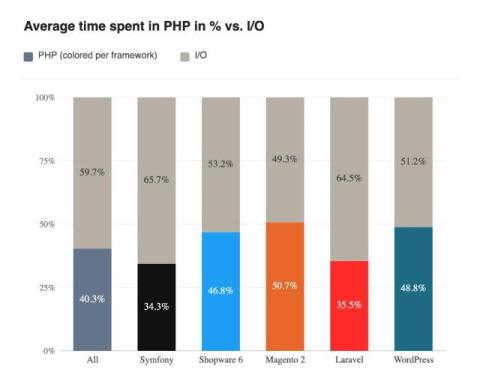
In discussions about PHP performance optimizations and micro-optimizations, there is often someone hand-waving the discussion down with, “PHP is rarely the bottleneck; I/O is.” But is that really true? Our data shows otherwise: across 1240 production projects, the average time spent in PHP is 40.3%. For 34% of these projects, they even spent more than 50% of their time in PHP, not in I/O. So, PHP often is the bottleneck, and depending on the framework, the effect is even higher.


Building a Data Warehouse with the Astera AI Agent: From Prompt to Insight

Establishing a data warehousing system that meets all your business intelligence targets is by no means an easy task. It traditionally involves profiling source systems, designing a dimensional model by hand, writing the DDL to deploy it, building the load pipelines, and scheduling them to run, work that can take weeks. Astera's manual, step-by-step approach to this is covered in Building a Data Warehouse – A Step by Step Approach.

A New Dawn: Enterprise AI's Shadow - Trillions of Tokens, Zero Governance

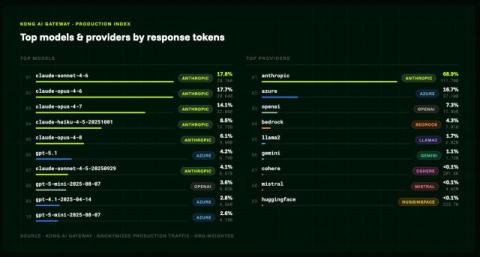
You Can't Govern What You Can't See A decade ago, cloud and API sprawl got ahead of governance, and enterprises spent years trying to account for costs they'd never tracked. Today, we're seeing the same pattern around AI, with hundreds of customers proxying traffic via Kong AI Gateway, which includes LLM, MCP, and agent connectivity. *AI spending will reach $2.59 trillion in 2026.* I regularly like to share what we're seeing in production at Kong.

What Are AI Agents Actually Doing When They Talk to Each Other?

You've probably seen the demos. An AI model kicks off a task, hands pieces of it to other AI models, and somehow the whole thing gets done. Emails drafted, code reviewed, reports summarized — all without a human in the loop. While a single agent doing one thing is impressive, the true paradigm shift occurs when transitioning from single-agent to multi-agent AI systems. It looks like magic. It isn't.

Simba Intelligence Wins Best Semantic Layer Solution at the DBTA Reader's Choice Awards

Database Trends and Applications (DBTA) has released its 2026 Readers’ Choice Awards, a competition voted on by DBTA readers to recognize the best information management products, services, and solutions. This year, we’re proud to announce that Simba Intelligence was voted Best Semantic Layer Solution. Here, we discuss the award and why a semantic layer shouldn’t be an afterthought to your data and analytics strategy.

Agentic Engineering and the Agentic Software Factory for Real-Time Data Products

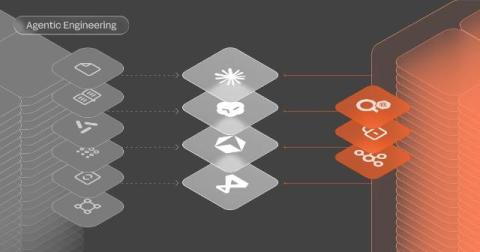
Software workloads that process large volumes of real-time data are becoming common. Decades working in this domain has taught me that building and operating reliable and maintainable real-time data products requires permissive access to the context of the environment. This article explains how to approach agentic engineering and apply it when building real-time data products inside an agentic software factory.

Highlights from Xray's Summer '26 Product Release Webinar

Every release brings new capabilities to help QA teams work more efficiently, improve collaboration, and adapt to the evolving demands of software testing. The Xray Summer '26 Product Release Webinar introduced the latest innovations across the platform, from AI-powered capabilities to usability improvements and a preview of what's coming next. Whether you joined the live session or are catching up now, this article highlights the key announcements from the webinar.

Which Customer Integrations Actually Drive Revenue in Real Estate Platforms?

Ask a PropTech team how many systems their platform connects to and you’ll usually get a number they’re a little proud of. A typical platform ties into an MLS feed, a couple of CRMs, a payments provider, an e-signature vendor, and a scatter of data sources, yet it still converts and retains about the way it did a year ago. So the question worth asking about real estate platform integrations isn’t how many you can support.