Systems | Development | Analytics | API | Testing

AI Agent Trends 2026 Explained: From Tasks to Outcome-Driven Systems

Google Cloud’s AI Agent Trends 2026 report points to a deeper shift than incremental automation. AI agents are no longer just layered onto existing systems; they begin to change how work itself is defined and executed. From employees orchestrating agents to workflows running as coordinated systems, the focus moves from tasks to outcomes.

Ably Python SDK v3: realtime for Python, built for AI

Python dominates AI development. It's where teams build their agents, orchestration layers, and the backend systems that turn LLM calls into products people actually use. Over the past year, those systems have matured rapidly. What used to live in notebooks and prototypes is now running in production, serving real users with real expectations around reliability and performance. That maturity brings infrastructure requirements. Tokens need to stream in order.

From 1 to 1 Million: How Agent Taskflow Built a Scalable AI Future with AWS and Confluent

In the explosive new landscape of generative AI (GenAI), the difference between a proof of concept and a production-grade system is scale. For artificial intelligence (AI) infrastructure startup Agent Taskflow Inc. (ATF), this wasn't just a future goal; it was a foundational requirement. Founded in 2023, ATF provides a platform for rapid AI agent bootstrapping, multi-agent orchestration, and comprehensive observability.

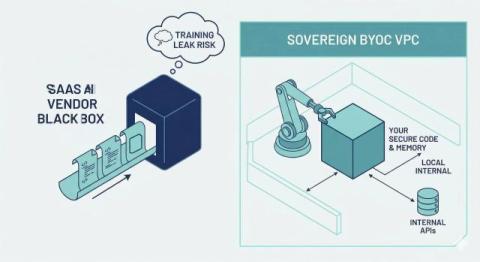
Why Autonomous AI Agents Can't Run on SaaS Infrastructure

The era of the “copilot” is ending. We are moving rapidly toward the era of the autonomous software factory, where autonomous agents don’t just autocomplete our code—they investigate, plan, test, and merge entire features while we sleep. But this shift has exposed a critical flaw in how we consume AI. For the past decade, the default motion for enterprise software has been SaaS. It’s easy, frictionless, and managed by someone else.

AI for Treatment Personalization: Use Cases, Benefits, and Implementation Guide (2026)

Healthcare still runs on generalized treatment protocols, even though every patient is biologically and clinically different. Clinicians often make decisions under time pressure using fragmented data from EHRs, labs, and patient history. That leads to gaps such as delayed diagnoses, trial-and-error treatments, and inconsistent outcomes. At the same time, expectations have changed. Patients now expect healthcare to be as personalized as the rest of their digital experiences.

ClearML + Nutanix: The Deep-Dive Guide to a Turnkey Enterprise AI Stack

Enterprise AI teams are laboring under two key pressures: 1) squeeze maximum value out of expensive GPUs and 2) deliver new GenAI experiences faster than competitors. Too often, their ability to deliver is blocked by: The new ClearML running on the Nutanix Kubernetes Platform (NKP) solution is designed to tackle every one of these headaches. Below, we unpack each layer of the stack and explain what it is, why it matters, and how it helps you ship AI both quickly and with cost efficiency.

Q&A: Data analytics leader on skills that will outlast the AI revolution, breaking into the field, and what it takes to succeed

Data analytics and science professions have undergone a dramatic transformation in the last decade. Demand for data talent has risen steadily, but the skills required to succeed in the field have evolved right alongside it. And now AI is a defining variable shaping what the next decade of analytics work will look like. It speeds up routine tasks, gives data access to more business users, and raises new questions about what skills will matter most in the not-so-distant future.