Systems | Development | Analytics | API | Testing

Why AI-Generated Code Needs AI-Powered Testing: The Validation Gap Developers Are Missing

You have an AI coding assistant open. You describe a function in plain language, it generates 40 lines of clean, well-structured code in under ten seconds, you review it briefly, it looks right, and you ship it. That workflow is now routine for millions of developers. The speed is real. The output looks authoritative. The problem is that looking right and being right are not the same thing.

AI Infused Development of Intelligent & Smart Traffic Management System

The traffic visuals you see in movies shot in the USA, UAE, or even the UK, for that matter, you know how managed and clean that looks. But do you still think that it’s all fiction? Well, if you are, then you’ve got it totally wrong. The way the UAE, the USA, and even Japan manage their traffic is just phenomenal, and it’s all thanks to a smart traffic management system you didn’t know about.

Multi-Database API Integration for AI Systems | DreamFactory

APIs are transforming how AI interacts with enterprise data. Instead of directly connecting AI to databases like MySQL, PostgreSQL, or MongoDB - which can lead to security risks, schema complexities, and high maintenance - APIs act as a secure middle layer. This approach simplifies data access, reduces risks, and ensures seamless integration with multiple databases.

Multi-device AI session continuity: how cross-device conversation sync works

You start a research task on your laptop, the network drops during a meeting, and when you open your phone to continue, the conversation is gone – you re-prompt, get partial duplicate results, and lose 30 minutes of work. The delivery layer dropped it. That's one of the most consistent problems teams hit when building AI applications. It's particularly acute in customer support, where a session belongs to the conversation - not to any single device, connection, or participant.

What Breaking AI Applications Taught Us About Building Reliable Ones

The global industry is currently in a feverish rush to "AI-enhance" every facet of the digital landscape. However, a critical distinction has emerged: while building an AI-integrated application is relatively simple, engineering one that maintains operational integrity in a production environment represents a watershed moment for modern engineering teams. BugRaptors spent the last year inside the intricate internal logic and non-deterministic layers of AI application testin g.

How to Differentiate and Scale Your Agency with AI Analytics

Automated reporting saves your team’s time. AI analytics saves your client relationships — and wins you new ones. Automated reporting for clients means your agency pulls performance data from every agreed source through APIs into one system, applies consistent metric definitions and formatting, and delivers the same client-ready view on a schedule — without anyone copying and pasting.

The quiet crisis in software quality - and what autonomous testing changes

There’s a tension building inside most engineering organizations right now, and not many people are talking about it openly. AI has given development teams an extraordinary gift: the ability to build faster than ever before. Features that once took days can be prototyped in hours. Applications that required large teams can now be scaffolded by a handful of engineers with the right tools. By almost every measure of development velocity, we are living through a remarkable moment.

Designing MCP Servers for Observability

Observability is the key to understanding and improving MCP servers. These servers connect AI agents to tools, but without visibility, issues like slow responses, errors, or security risks can go undetected. Observability helps track how agents interact with tools, pinpoint failures, and optimize performance.

Everything we announced at our Agentic Quality Engineering Platform launch

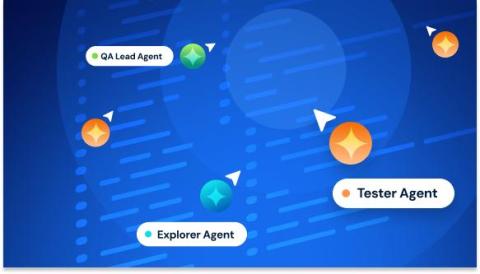
Over 1,000 people around the world tuned in as Tricentis CEO Kevin Thompson and VP of AI David Colwell unveiled our new integrated platform, followed by a live demo from Enterprise Solution Architect Matt Serpone. From our headquarters in Austin, Texas, we unveiled a unified solution designed to help enterprises treat quality as a coordinated system rather than a collection of disconnected tools.