Systems | Development | Analytics | API | Testing

AI Analytics with Databox

You know the feeling. It’s Monday morning, and someone asks, “How are we doing?” Suddenly, you’re toggling between six tabs, exporting CSVs, and trying to remember which dashboard has the number they actually need. By the time you’ve pulled everything together, the meeting’s over. This was the problem we originally built Databox to solve: centralizing scattered data into dashboards that actually make sense. But dashboards were only the first step.

On-Prem Enterprise Alternatives to Cloud-Hosted AI Dev Tools | DreamFactory

This guide explains how enterprises can replace cloud-hosted AI developer tools with secure, on-prem alternatives. It covers architectures, governance, and selection criteria that meet compliance and performance goals. You will learn how teams stand up private code assistants, model gateways, vector search, and policy controls behind the firewall.

You don't have to choose between GitHub and Bitrise

If you're part of a GitHub shop evaluating Bitrise for your mobile app teams, you might be hearing a familiar objection: "Why add another tool? GitHub Actions is our org standard, and it will work for mobile." It's a reasonable point. Nobody wants to maintain a snowflake system that sits outside the approved tool list. But here's the thing — it doesn't have to be GitHub Actions *or* Bitrise. The reality is that mobile CI/CD has unique demands.

What is Semantic Caching?

When we think of a typical API, part of a production-ready setup generally includes a cache. This cache allows for similar requests to be served without having to do the entire roundtrip. But when it comes to AI applications powered by large language models, traditional caching falls short. This is because queries to an AI endpoint may look different in terms of how things are worded or phrased but actually mean the same thing semantically.

Are Your APIs Ready for AI? Preparing Your Landscape for Intelligent Consumption

Getting APIs to work with AI has become one of the major themes in the API space recently. And that’s not surprising because APIs are at the core of an AI’s ability to reach out into the world, to get access to data and information, and to invoke commands and workflows to act. This was always what APIs were for, but in this article we will dive a little deeper what that evolution looks like, and what that means for API governance and management.

How to Prioritize AI Investments Using the Impact-Maturity Matrix?

AI is no longer an experimental line item in the budget. For most U.S. CXOs, the real challenge in 2026 is far more practical: where should we place our bets first? With dozens of AI use cases competing for attention, capital, and executive sponsorship, prioritization has become a boardroom conversation, not a lab discussion. Are you investing in AI initiatives that can move the needle this fiscal year, or are you spreading resources thin across pilots that never scale?

Closing AI-generated test gaps with qTest & SeaLights

In today’s fast‑moving software world, release velocity keeps climbing, and AI is accelerating it even further. To keep quality teams aligned with rapid change, we’ve brought together two powerful capabilities: Tricentis SeaLights’ deep code-level insights and Tricentis qTest’s intelligent test management and AI-generated test creation. Here’s how these technologies integrate to create a complete, AI-driven testing feedback loop.

Scaling Gherkin Software Testing for Modern QA Teams

Adopting Behavior Driven Development (BDD) starts with enthusiasm. The first fifty scenarios are easy to write. They clarify requirements and align the team. But somewhere around scenario, the reality of Gherkin software testing sets in. Feature files become bloated. Scenarios start to conflict. The "simple" English syntax that was supposed to bridge the gap between business and technical teams becomes a maintenance nightmare that requires constant refactoring.

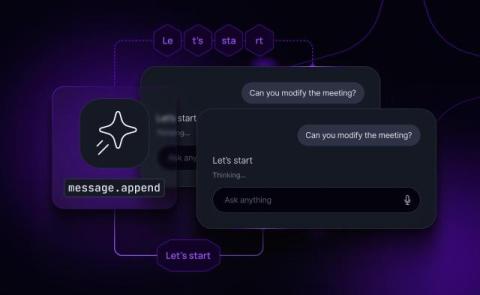
Appends for AI apps: Stream into a single message with Ably AI Transport

Streaming tokens is easy. Resuming cleanly is not. A user refreshes mid-response, another client joins late, a mobile connection drops for 10 seconds, and suddenly your “one answer” is 600 tiny messages that your UI has to stitch back together. Message history turns into fragments. You start building a side store just to reconstruct “the response so far”. This is not a model problem. It’s a delivery problem That’s why we developed message appends for Ably AI Transport.