Systems | Development | Analytics | API | Testing

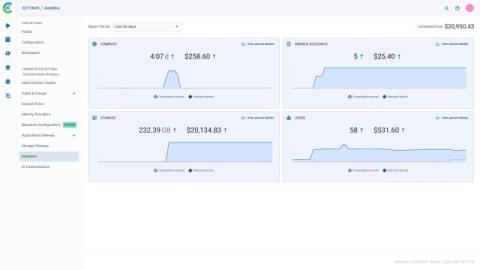
ClearML Enterprise v3.28: Usage Metering, Policy Enhancements, and Smarter Admin Controls

Author: Adam Wolf ClearML Enterprise v3.28 offers new features and improvements to help administrators monitor usage, enforce policies, and streamline operations across large, multi-team environments. This release introduces enhanced usage metering with a simplified interface, improved resource policy management, improved dataset controls, and UI enhancements to provide greater clarity, control, and productivity for AI teams.

Optimizing Bitrise Build Cache clients

Having a build cache solution is a powerful way to speed up builds, especially at scale. Bitrise Build Cache already accelerates builds across multiple ecosystems, but to get the most out of it we also need to optimize the build cache clients themselves and ensure stability across changing network environments. In this blog post, I’ll walk through the steps we took to improve stability and performance for Bitrise Build Cache customers.

OpenTelemetry vs. Deep Runtime Telemetry: Which Is Better for Your Node.js Stack?

If you're running Node.js in production, you've likely heard the buzz around OpenTelemetry. It's the industry standard for observability, backed by major vendors, and it promises vendor-neutral telemetry collection across your entire stack. For many teams, it's a game-changer: finally, a unified way to collect traces, metrics, and logs without getting locked into a single vendor's ecosystem.

From APIs to Agentic Integration: Introducing Kong Context Mesh

The promise of agentic AI is clear: autonomous systems that can reason, plan, and act on your behalf. But there's a fundamental problem standing between that vision and enterprise reality: agents need context to make decisions, and that context lives scattered across your organization. Context is any data — or any abstraction that enables access to data — that an agent needs to do its job. Customer records in your CRM. Inventory levels behind your fulfillment APIs.

Disaster Recovery in 60 Seconds: A POC for Seamless Client Failover on Confluent Cloud

I’ve worked with Apache Kafka since 2019, and deciding how to design and implement client failover was a sticking point in almost every use case I dealt with. Even for Confluent customers—who have the benefit of features such as Confluent Replicator, Multi-Region Clusters, and Cluster Linking—ensuring seamless failover between Kafka environments is a challenging problem.

Security Testing Explained: Protecting Modern Applications And Apis

Security testing helps identify weaknesses in software before attackers can exploit them. It protects sensitive data, ensures system stability, and controls user access. With web, mobile, and API-based applications growing rapidly, security threats are increasing. Security testing helps teams detect risks early, prevent breaches, and meet compliance standards.

How to Make Data Work for Agentic AI

For decades, organizations have worked to use data to make better decisions and drive better outcomes. Data has become the lifeblood of the business, and AI now has the power to unlock it in new ways. The paradigm is shifting, from dashboards and visual interfaces to AI driven experiences. But too much data is still stuck in silos, incomplete, and inaccurate. Many analytics workflows remain manual, which slows time to value, limits insight quality, and raises cost.

The Hidden Cost of Building Your Own LLM Data Layer

For most businesses, the break-even point for self-hosting only makes sense if processing 100–200 million tokens daily. Otherwise, managed API solutions are more cost-effective, faster to deploy, and easier to maintain. Alternatives like DreamFactory offer pre-built, secure API layers, saving time and money while simplifying enterprise AI integration. Bottom line: Building your own LLM data layer is a major investment with hidden challenges.

Best Flaky Test Detection Services and Agencies in 2026

Your CI pipeline failed again. You check the logs. Nothing changed. You run it again. It passes. That right there is the silent killer of engineering teams. Flaky tests. And most companies are bleeding money because of them without even realizing it. I've spent years doing QA consulting. I've sat in rooms where engineers argued for 45 minutes about whether a failure was real or not. I've watched teams lose entire sprints chasing phantoms. And the pattern is always the same.