Systems | Development | Analytics | API | Testing

How to Integrate Salesforce Apex with Other Applications

In our interconnected digital world, seamless integration is key to unlocking unparalleled efficiency. Explore the art and science of integrating Salesforce Apex with various applications. Whether you're a novice or a seasoned developer, this guide will illuminate pathways to enhance your application's synergy, ensuring a smoother and more productive workflow. In this article, we delve into Salesforce Apex, integration importance, methods, and best practices.

Make your React-based applications collaborative using our new Spaces Hooks and starter kits

We are excited to announce that the Ably Spaces SDK now includes support for React Hooks. This means that developers can integrate collaborative features into their React-based applications in an efficient and idiomatic way. To help you quickly get started we have created a set of React-based starter kits for the four key collaborative features supported within the Spaces SDK - jump to these now!

Understanding Dreamfactory's Docker and Kubernetes Pricing Model

We’re excited to unveil our brand-new Docker and Kubernetes offerings, specifically tailored to give you more flexibility, scalability, and options to manage and deploy your software. As always, transparency is a cornerstone of our relationship with our customers. To ensure clarity, we’ve put together this guide to help you understand our pricing structure for these offerings.

Kubernetes Gateway API: an Engineering Perspective

The Kubernetes Gateway API represents a massive collaborative effort and key advancement in Kubernetes networking. Developed by multiple vendors and community members, the Gateway API provides a robust and extensible new standard for managing ingress traffic. With the recent general availability of version 1.0.0, the Gateway API is now ready for production use. The release of the Gateway API is a major milestone for Kubernetes networking that has the potential to simplify and enhance ingress management.

Declaring check-ins in PHP/Laravel config

If your cron job fails in a forest, and nobody is around, does it make a sound? Honeybadger's check-in monitoring for PHP/Laravel gives you peace of mind, knowing that if any job fails, whether it's your billing cron job, your nightly backup, or even that third-party service's new integration, it won't happen silently. Instead, we'll notify you instantly via the tools you already use (Slack, PagerDuty, etc.).

What Is MySQL API?

When companies have massive volumes of information to deal with, it's challenging to make sense of it all. With information spread across the organization, gathering valuable insights to drive decision-making is nearly impossible. Bringing all of this information together in a consolidated platform helps support discovery, reporting, and analysis which is critical for defining business strategies. In the era of digital disruption, agility is key.

How To Design a Dashboard in Yellowfin: Part One

Designing a dashboard comprises many different considerations. Whether it's the business-user, data expert or business unit building the dashboard, our team aims to create a guide that will be useful for everyone who wants to (or needs to) create a dashboard, but is having some troubles figuring out how to do it. In this latest series of blogs, the Yellowfin Japan team takes the lead in introducing the process of creating a new dashboard in Yellowfin.

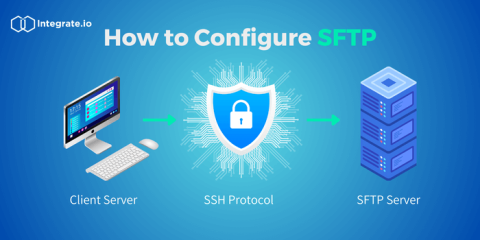
AS2 vs. SFTP: Key Differences & How to Choose

Businesses of all sizes need secure and scalable methods for sharing information, but it's not always clear what the best protocols and solutions are for each use case. Two of the most commonly used data transfer protocols are Applicability Standard 2 (AS2) and Secure File Transfer Protocol (SFTP). While AS2 is a protocol-based standard that's most often used for data transfers that require proof of receipt, SFTP is a more commonly used protocol for secure, scalable file transfer.