Systems | Development | Analytics | API | Testing

Ep 83 | From KPIs to Action: What Comes After The Dashboard?

Your dashboard can tell you sales are down, but it can't tell you why or what to do next. Dashboards have become the default way to monitor a business. Bhaskar Sunkara argues they're only the starting point. The next step is AI that understands business context and helps leaders move from insight to action.

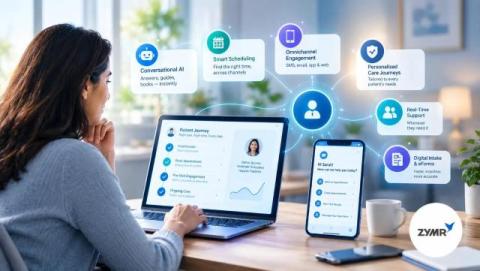
How to Build an Ambient Clinical Documentation Solution (AI Medical Scribes) - The 2026 Build Playbook

Clinical documentation has become one of the biggest sources of administrative burden in healthcare. Physicians spend hours every week creating notes, updating EHRs, and completing after hours charting. As a result, healthcare organizations are increasingly investing in ambient clinical documentation solutions that can capture conversations, generate notes, and reduce manual documentation work.

eBPF: Preventing Garbage HTTP Payloads When Reading Kernel Scatter-Gather Buffers

Recently someone on our team opened a traffic snapshot and found an HTTP request that was captured with our eBPF capture agent, nettap. Our protocol dissector parsed most of the response correctly, but that correctness ended once the response headers were processed. What they ended up with was a recording of an HTTP request/response where the response body was just an incorrect collection of garbage binary data when it should have been JSON text.

Advancing ThoughtSpot's Commitment to Apache Ossie (Incubating), the Next Chapter of OSI

When the Open Semantic Interchange (OSI) initiative launched last year, it set out to solve a problem every data leader recognizes: the same business metric gets defined a dozen different ways across a company's BI tools, warehouses, and now, AI agents. "Monthly active users" in the CRM rarely matches "monthly active users" in the warehouse, and every new AI copilot added to the stack makes the gap more visible, not less. That initiative has just taken its most consequential step yet.

Use of AI in Software Development

Quick application integrity check: can your quality strategy survive the tsunami of code coming its way? AI is accelerating development, increasing code abstraction, and multiplying the volume of software teams need to validate. But existing QA approaches weren't built for this level of speed and scale. Application integrity closes the growing gap between what teams build and what they can verify, providing continuous assurance that software works as intended.

Building Enterprise-Grade AI Agents: From Prototype to Production

Everyone can build an AI agent today. The hard part isn't getting an agent to answer a question or complete a demo. It's deploying one that employees trust, security teams approve, and operations teams can manage at scale. That's where many AI projects stall. As organizations move beyond experimentation, the conversation shifts from prompt engineering to production readiness. Can the agent safely access business data? Can you evaluate changes before deployment? Can you understand why it made a decision?

Why Trusted Data Is the New AI Moat (w+ Rick Kranz from the AI Marketing AUtomation Lab)

Rick Kranz has built over 100 AI automations for his community and clients — he has no reason to defend Databox. But when he tried to run his AI analysis without the Databox MCP, it just stopped working. In this episode, Rick and Pete break down exactly why: the semantic layer, the metric definitions, and the standardized math that make an AI's answer trustworthy instead of a guess. If you've ever wondered why connecting five random MCP servers to Claude doesn't give you the same results as a purpose-built data layer, this is the episode.

Conversational Analytics in 2026: Where Natural Language Search Helps

In 2026, asking a BI tool, “What happened to revenue last quarter?” feels almost effortless. That ease is the appeal of conversational analytics. It turns plain language into charts, metrics, and short explanations. It sits inside the broader world of augmented analytics, where AI helps people ask better questions and move faster. But speed can hide problems. If the metric is vague, the calendar is wrong, or access rules are loose, a fast answer can still be the wrong answer.