Systems | Development | Analytics | API | Testing

Why Autonomous AI Agents Can't Run on SaaS Infrastructure

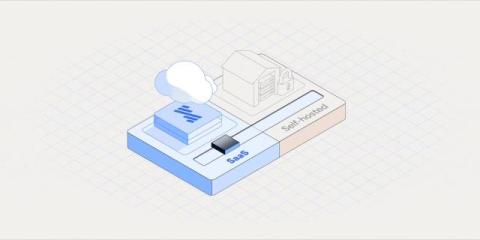
The era of the “copilot” is ending. We are moving rapidly toward the era of the autonomous software factory, where autonomous agents don’t just autocomplete our code—they investigate, plan, test, and merge entire features while we sleep. But this shift has exposed a critical flaw in how we consume AI. For the past decade, the default motion for enterprise software has been SaaS. It’s easy, frictionless, and managed by someone else.

The Real Cost of Software Defects: Customer Churn That Costs Businesses Millions of Dollars

Software defects don’t just drain budgets; they cost businesses customer loyalty. Poor software quality can lead to poor customer experience and drive customer churn, resulting in missed revenue and increased expenses. Learn how better processes, such as test data management, can reduce the cost of software defects and protect your business outcomes.

Q&A: Data analytics leader on skills that will outlast the AI revolution, breaking into the field, and what it takes to succeed

Data analytics and science professions have undergone a dramatic transformation in the last decade. Demand for data talent has risen steadily, but the skills required to succeed in the field have evolved right alongside it. And now AI is a defining variable shaping what the next decade of analytics work will look like. It speeds up routine tasks, gives data access to more business users, and raises new questions about what skills will matter most in the not-so-distant future.

Open Banking: The Guide on APIs, Regulations, and the Future of Finance

The global financial services industry is undergoing a massive, API-driven revolution. With the global open banking market valued at $31.61 billion in 2024 and projected to grow to $135.17 billion by 2030, this shift is accelerating worldwide. This definitive guide explores the core APIs, the evolving global regulations (including FAPI 2.0, PSD3, and Section 1033), and the massive opportunities shaping the future of finance for banks, fintechs, and enterprises.

ClearML + Nutanix: The Deep-Dive Guide to a Turnkey Enterprise AI Stack

Enterprise AI teams are laboring under two key pressures: 1) squeeze maximum value out of expensive GPUs and 2) deliver new GenAI experiences faster than competitors. Too often, their ability to deliver is blocked by: The new ClearML running on the Nutanix Kubernetes Platform (NKP) solution is designed to tackle every one of these headaches. Below, we unpack each layer of the stack and explain what it is, why it matters, and how it helps you ship AI both quickly and with cost efficiency.

GitHub Actions macOS runner alternative: M4 Pro with 54GB RAM and same-day Xcode

Bitrise Build Hub is a vertically integrated mobile CI/CD infrastructure layer that drops into GitHub Actions with one line of YAML. GitHub Actions runs your CI, but its Mac runners are holding your mobile builds back. Limited M1/M2 hardware, stale Xcode, no cache co-location, no macOS uptime SLA. The infrastructure wasn't built for mobile. Build Hub was. Build Hub upgrades the runner layer underneath.

Monitoring Express Route Performance with AppSignal

Slow Express routes rarely look broken in logs. They just feel sluggish to users. With AppSignal, though, you can quickly identify which endpoints are the slowest, gain insight into each request, and find out if the latency is related to any errors or slow queries. In this guide, you'll set up a mock Express application, create a load, and use AppSignal to analyze a route's performance as if you were working through a live incident.

SQL Query Optimization: How Driver Architecture Shapes Database Performance

When it comes to database performance, most focus on writing better SQL or tuning database parameters. Both matter. But there’s a third layer that’s crucial to consider: the driver sitting between your application and your data source. Drivers decide where query operations actually execute. Some operations get pushed down to the data source, a fast process. Others get processed in the driver layer itself, which takes more time.

AI for Treatment Personalization: Use Cases, Benefits, and Implementation Guide (2026)

Healthcare still runs on generalized treatment protocols, even though every patient is biologically and clinically different. Clinicians often make decisions under time pressure using fragmented data from EHRs, labs, and patient history. That leads to gaps such as delayed diagnoses, trial-and-error treatments, and inconsistent outcomes. At the same time, expectations have changed. Patients now expect healthcare to be as personalized as the rest of their digital experiences.