Systems | Development | Analytics | API | Testing

Beyond Static KPIs: Leveraging Augmented Analytics for Predictive Business Growth

In volatile markets, a KPI dashboard that only tells you what happened last week is already too late to guide confident action. Many companies have dashboards. Fewer have KPI systems that help them spot revenue shifts, retention risk, margin pressure, or supply-chain trouble before those issues hit the business hard. That gap is where augmented analytics comes in.

Building the Ultimate Sales Dashboard

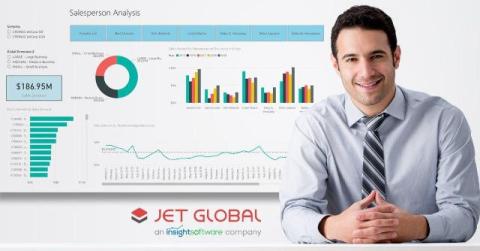
Data is the key to actionable decision-making. In a fast-paced environment like sales, you’re surrounded by it. From gathering customer data to monitoring sales status to tracking goals, salespeople are constantly collecting and using data. However, the challenge with having all of this data at your fingertips is organizing it in a way that lends itself to analysis and action.

Kai Has a Different Personality in Czech vs English

Anthropic recently published research showing that Claude behaves differently depending on the language you use. Not just translating differently. Actually expressing different values. In Arabic, Claude is warmer and more deferential. In English, it's more rigorous and cautious. In Russian, it challenges your assumptions more. When we read that, we had one question: does Kai do this too? So Jordan, our AI lead, analysed around 3,000 internal Kai sessions. The answer: yes.

Managing Across Schedulers: HPC Meets Kubernetes

Almost every infrastructure team running modern AI is wrestling with the same question. The orchestrator their AI workloads want, Kubernetes, and the orchestrator their HPC environment was built on, Slurm, pull in different directions. This piece, drawn from the HPCKP 2026 session of the same name, looks at why that tension exists, what the workloads actually look like, how teams are bridging the two today, and where the pattern is heading.

AI Marketing Forecasting: The Plan Is Only as Good as the Data It Can See

Ask a Marketing Lead how the quarterly plan actually gets built. Not the strategy, the mechanics. The answer, in most teams, is a spreadsheet: spend pulled from five ad platforms with five different backends, pipeline exported from the CRM, last quarter’s numbers copied from a deck, targets negotiated in a separate thread. One customer described their version of it to us in a sentence that needs no editing.

How to Use the Shopify MCP with Claude, What It Does Well, and How Databox MCP Completes the Picture

Shopify’s MCP servers give Claude real command of your store, from storefront conversations to bulk product updates. Analytics is the one job they were never built for, and pairing them with Databox MCP closes that gap.

Top 10 Reasons to Invest in Product Experience Management (PXM) Software

Implementing a PXM solution provides numerous benefits to your organization, from improving efficiency to increasing sales, reducing returns, and promoting customer loyalty. Today, we’re going to explore these benefits in more detail. Interested in the distinctions between PIM and PXM? See our breakdown of how they differ (but are also similar) here.

Beyond Migration: Elevating the SI Role to Strategic AI Architect

For years, the mandate for System Integrators (SIs) was clear: lead the "cloud-first" migration. The promise was lower costs, greater agility, and seamless innovation. But for many enterprise customers, that promise remains unfulfilled. Instead of agility, organizations have inherited a complex, fragmented data estate. Data is siloed across on-premises legacy systems and multiple public clouds, creating governance headaches and inflating infrastructure costs.

The Analytical Work Business Users Won't Hand Over to AI

The AI-analytics category has one operating assumption: AI’s job is to do more of what humans currently do. Adoption is measured by delegation surface. Success is when AI takes the whole task. Ask the executives running AI daily what they refuse to delegate, and you get a different story. Actually, you get the same story, from operators who do not know each other, running different companies, across different functions.