How to Talk to Your CMO About Data Analytics
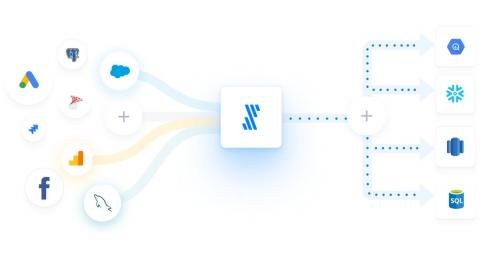
Minimize human error, combine disparate marketing data and have a true conversation about marketing campaign effectiveness.


Minimize human error, combine disparate marketing data and have a true conversation about marketing campaign effectiveness.
We now support more popular enterprise data sources, including IBM db2, Oracle RAC and SAP HANA.
Data analysts can spend hours writing SQL each day to get the right insights. So it’s crucial that the tools in the Google Cloud Console make that job as easy and as fast as possible. Now, we’re excited to show you how BigQuery’s Cloud Console UI has been updated with radical usability improvements for more efficient work, making it easier to find the data you need and write the right SQL quickly.
Cloudera Flow Management, based on Apache NiFi and part of the Cloudera DataFlow platform, is used by some of the largest organizations in the world to facilitate an easy-to-use, powerful, and reliable way to distribute and process data at high velocity in the modern big data ecosystem. Increasingly, customers are adopting CFM to accelerate their enterprise streaming data processing from concept to implementation.
The Snowflake Data Cloud provides the unique ability for anyone to join their own data sets with thousands of live third-party data sets near-instantly, securely, and without moving data. Businesses operating in the Data Cloud gain a huge advantage over their competitors who are stuck in data silos and struggling with stale data sets downloaded from their legacy data providers weeks, months, or years ago.
Before the end of the year, I met with Christina McCoy, a Customer Success Manager for our federal region. We discussed some of her observations and proven practices for driving adoption in her accounts. Christina joined Qlik two years ago; she has over five years of CSM experience and is a graduate of Howard University, where she was a pitcher for the Bison’s softball program.
Data science has become an important capability for enterprises looking to solve complex, real-world problems, and generate operational models that deliver business value across all domains. More and more businesses are investing in ML capabilities, putting together data science teams to develop innovative, predictive models that provide the enterprise with a competitive edge — be it providing better customer service or optimizing logistics and maintenance of systems or machinery.
One particular feature requested by our customers is 3D body mapping, and whether exporting 3D models and utilizing its visualization and filtering can be applied easily. This technical walkthrough shows you how to leverage Yellowfin to integrate 3D models within Yellowfin and then use them to create a fully interactive display in your dashboard.