Systems | Development | Analytics | API | Testing

Comments in Python 3: How to write them?

Python was created by Guido van Rossum in the early 90's and is an interpreted, high-level programming language that is used by coders of all types. It is a widely-used programming language because of its readability and the fact that it is easy to learn for novice programmers. It supports multiple programming paradigms, including object-oriented, functional, and imperative/procedural styles.

Test Automation With Python

According to IEEE Spectrum Python is the top programming language of 2021, and since April Loadero supports Python as a test script language. Many engineers agree that test automation with Python is an excellent choice, and in this blog post, we’ll show the basics of it. Python tests in Loadero use the Py-TestUI framework. Py-TestUI wraps and implements additional features for Selenium Python binding.

REST API Observability for Python

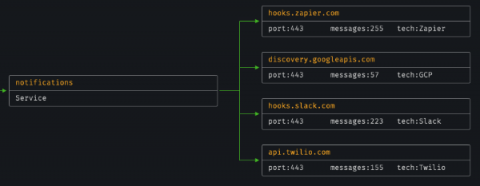
In this blog post we’ll help answer the age old question, “What does this service talk to and what does it say?” We’ll see how to inspect inbound and outbound REST API calls to see what calls are being made and what incoming traffic causes a reaction. This can be pretty handy when you’re taking over maintenance of an existing service, or if your code just isn’t behaving the way you expect.

Connecting to MySQL With Python

The MySQL database is a popular option for storing data. It's powerful, reliable, and easy to use. However, it can be challenging to work with if you don't have the right tools. Luckily, Python has an API for MySQL that makes working with this database simple. Connecting to MySQL with Python code is a great way to build a rich set of data through programming and to create database content quickly.

The Ultimate Guide to Logging in Python

Logging is used to track events that happen when an application runs. Logging calls are added to application code to record or log the events and errors that occur during program execution. In Python, the logging module is used to log such events and errors. An event can be described by a message and can optionally contain data specific to the event. Events also have a level or severity assigned by the developer. Logging is very useful for debugging and for tracking any required information.

How to Learn Python Scripting in 7 Simple Steps

Python is one of the most in-demand programming languages in the world — and for good reason. Knowing how to code has never been so valuable thanks to the expanding world of tech and focus on data science. From landing high-paying jobs to improving your skillset, learning Python scripting can bring you many opportunities to succeed. However, while these opportunities are robust, many challenges come with learning Python.

How to Catch Multiple Exceptions in Python?

When a program encounters an exception during execution, it is terminated if the exception is not handled. By handling multiple exceptions, a program can respond to different exceptions without terminating it. In Python, try-except blocks can be used to catch and respond to one or multiple exceptions. In cases where a process raises more than one possible exception, they can all be handled using a single except clause.

How to Handle Unhashable Type List Exceptions in Python

The Python TypeError: unhashable type: 'list' usually means that a list is being used as a hash argument. This error occurs when trying to hash a list, which is an unhashable object. For example, using a list as a key in a Python dictionary will cause this error since dictionaries only accept hashable data types as a key. The standard way to solve this issue is to cast a list to a tuple, which is a hashable data type.