Systems | Development | Analytics | API | Testing

Here's the Jira Data Center Alternative You're Looking For

Atlassian recently announced end of life for all their Data Center products, including Jira Data Center. That means every studio must evaluate and choose a new planning tool by Atlassian’s planned sunset date, March 28, 2029. If you’re looking for a new on-premises solution—because cloud options aren’t viable for your team—this blog explains how P4 Plan can meet, and often exceed, what Jira Data Center and Jira Cloud offer now.

Are Microservices Dying?

LLMs are absorbing the business logic of microservices for agentic use cases — but both patterns will coexist in enterprise infrastructure for a long time. Cloud-native infrastructure (microservices + APIs) keeps powering web and mobile experiences. The agentic layer — LLMs, MCP tool calls, and context traffic — runs in parallel, activating the same APIs and CRUD operations underneath. Kong manages both swim lanes: the API traffic between clients and microservices, and the context traffic flowing between agents and LLMs.#Shorts.

AlloyDB Lakehouse Federation: Unified access to BigQuery and Google Cloud Lakehouse

Join Paul Ramsey, Product Manager at Google, for a demonstration of AlloyDB’s new Lakehouse Federation capability. Using a fictional financial services firm, Cymbal Investments, we show how analysts can research S&P 500 trends by combining real-time vector search with data in BigQuery and Google Cloud Lakehouse. In this video, you will see: Learn how AlloyDB enables cloud and AI transformation for your data platform.

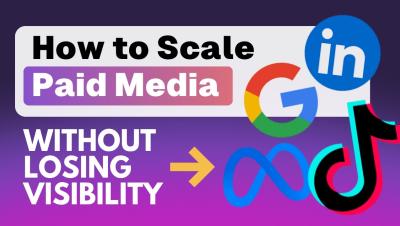
How to Scale Paid Media Across 5 Channels Without Losing Visibility (Google, Meta, LinkedIn, TikTok)

Agencies hit the same wall every time they try to grow: who is going to actually run the campaigns, and how do you keep visibility across every client and every channel when you do? Ashish Chaturvedi, data analyst of Atidiv, walks through how Atidiv and Databox solve both sides of the problem. Atidiv handles campaign execution across Google Ads, Meta, LinkedIn, TikTok, and email. Databox gives you the visibility layer: one interactive view where you can see spend, revenue, and return across every channel without chasing updates in Slack, email, or spreadsheets.

RAG and GenAI for Regulated and Public Sector Architectures

As a cloud engineer, I’ve seen organizations rush to implement Generative AI, only to hit a brick wall when the Chief Information Security Officer (CISO) asks about data residency or PII leakage. In the public sector and regulated industries like healthcare or finance, moving fast and breaking things isn't an option.

Enterprise Knowledge Management with RAG for Digital-Native Companies

Enterprise knowledge management RAG (Retrieval-Augmented Generation) is a production-grade AI architecture designed to connect Large Language Models (LLMs) securely to a continuous, real-time flow of proprietary corporate data. Unlike basic RAG implementations that rely on static document uploads and batch-processed vector databases, an enterprise RAG architecture utilizes event streaming to ingest document updates, regenerate embeddings, and synchronize context in real time.

Autonomous Agentic Event-Driven Systems Architecture

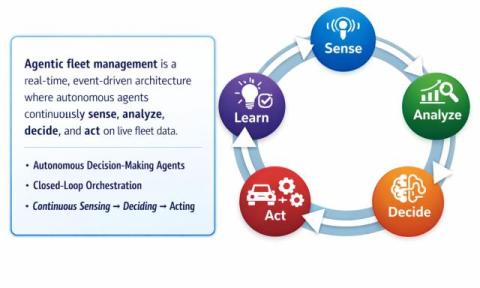
Autonomous / agentic event-driven systems are a class of AI-native architectures where software agents continuously sense events, reason over shared state, take actions, and learn from outcomes—all in real time and without human-in-the-loop orchestration. At an architectural level, these systems combine event streaming, stateful processing, and agentic decision layers to form closed-loop AI systems capable of operating independently at scale.

How a Hospital Management System Improves Patient Flow, Billing & Compliance: A Practical Guide

In an era where healthcare margins are tightening and regulatory scrutiny is at an all-time high, hospitals can no longer afford to operate with siloed systems. The traditional disconnect between clinical operations and financial administration creates a black hole where data gets lost, patients wait too long, and revenue evaporates through billing errors. The solution lies in a robust, centralized hospital management system (HMS).

Load Testing vs Stress Testing: Key Differences and When to Use Each

Load testing and stress testing are not the same thing, even though the terms get thrown around interchangeably in standups, RFPs, and vendor pages. Both put traffic against your service, but they answer different questions. Confusing them costs you either money (over-scoping a test) or a 3 a.m. incident (under-scoping one). This is the short version, then the long one. Is Your Infrastructure Ready for Global Traffic Spikes?