Systems | Development | Analytics | API | Testing

Unleash cloud-native analytics and AI on-premises with Cloudera

Unlock the power of your on-premises data with Cloudera for private cloud. Harness cloud-native agility, flexibility, and cost efficiency within your private open data lakehouse for unparalleled access and control over your data. Build a foundation of secure, accurate, and trusted data for precise business insights and of course, trusted AI. Unleash the full potential of your data with Cloudera's Private Cloud Data Services.

Getting Started With Cloudera Open Data Lakehouse on Private Cloud

Cloudera recently released a fully featured Open Data Lakehouse, powered by Apache Iceberg in the private cloud, in addition to what’s already been available for the Open Data Lakehouse in the public cloud since last year. This release signified Cloudera’s vision of Iceberg everywhere. Customers can deploy Open Data Lakehouse wherever the data resides—any public cloud, private cloud, or hybrid cloud, and port workloads seamlessly across deployments.

How to Build Multi-Tenant Environments with Yellowfin BI

Multi-tenancy is almost a prerequisite to provide a secure environment for each of your customers when using business intelligence (BI) tools embedded in external services. Although it is possible to control the access rights by granting individual access to user accounts without separating tenants, it is obvious that the management will become more complicated as the number of customers grows. In a previous blog, we covered what multi-tenancy means in the context of embedded analytics.

FactoryBot for Rails testing

In the Ruby community, there's near-unanimous agreement on the importance of testing. Tests act as a safeguard, ensuring that the digital experiences we craft remain consistent, reliable, and of high quality. Many in the Ruby community claim that no code change is complete without tests. They are an integral part of the development workflow. Regular testing ensures that new features, refactors, or bug fixes do not introduce unforeseen issues or regressions.

WebAssembly (WASM): Opportunities for Ruby Developers

Most websites are built with high-level languages like Ruby. Developers can always optimize their code for improved performance. Yet, even with top-notch optimization practices, what if your website still lags? How could WASM help improve the performance (time and speed) of your Ruby apps? Web Assembly is a technology that allows developers to compile code written in languages other than Javascript and run it on the web browser.

How Unravel Enhances Airflow

In today’s data-driven world, there is a huge amount of data flowing into the business. Engineers spend a large part of their time in building pipelines—to collect the data from different sources, process it, and transform it to useful datasets that can be sent to business intelligence applications or machine learning models. Tools like Airflow are used to orchestrate complex data pipelines by programmatically authoring, scheduling, and monitoring the workflow pipelines.

What Causes Flaky Behaviour in Your Tests | Cristiano Cunha | #softwaretesting #flakytest

In this illuminating video, Cristiano Cunha, a seasoned expert in software testing, unravels the mysteries of flaky behavior in your tests. Cristiano explores the various factors that contribute to this unpredictable and often frustrating phenomenon, providing viewers with a comprehensive understanding.

Load Any Source to Any Target | Data

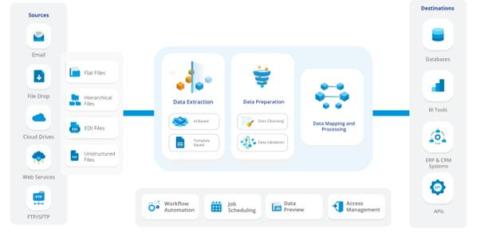
Load any data from any source into any target. This can be done in multiple different ways however Linx allows you to do it in a simple, organised and reliable way. Use Linx to: Load data from a CSV Load data from an Excel file Load data from JSON Load data from XML Load data from any database Load data toa CSV Load data to an Excel file Load data to JSON Load data to XML Load data to any database We answer the following questions: How to create data pipelines? How to load data? How to move data from one target to another?

The Evolution of Search: How Multi-Modal LLMs Transcend Vector Databases

As we venture deeper into the data-driven era, the traditional systems we have employed to store, search, and analyze data are being challenged by revolutionary advancements in Artificial Intelligence. One such groundbreaking development is the notable advent of Large Language Models (LLMs), specifically those with Multi-Mod[a]l abilities (e.g., Image & Audio).