Systems | Development | Analytics | API | Testing

Meet Bugfender: Debug Apps With Real User Context #aicoding #iosdev #aidevelopment #aidebugging

Trusted by more than 35,000 apps, Bugfender helps developers understand bugs on real users’ devices, even without a crash. Collect logs, errors, device details and feedback with the SDK, then connect an AI agent through MCP to investigate the evidence.
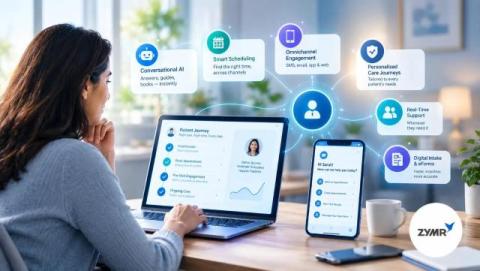
Top Care Journey Orchestration Tools for Patient Engagement

Care journey orchestration tools connect patient communication with scheduling, care instructions, and follow-up workflows. They use available patient information and configured rules to guide actions across care stages. Depending on the tool, patient responses can trigger scheduling, additional guidance, or care team alerts. The goal is engagement that produces action.

Best AI Video Tools for Software Demo and Team Marketing Workflows

Sponsored by Magic Hour. This article was prepared with AI assistance. It compares documented product capabilities and practical workflow considerations; it does not report hands-on tests, measured performance, or a universal ranking. Choosing an AI video tool is partly a creative decision and partly a systems decision. A clip must look appropriate, but a marketing team also needs to know where its inputs came from, how the result will be reviewed, and whether another colleague can reproduce the process. An impressive demo answers only one of those questions.

AI Gave Developers More Capacity. Testers Are Next.

Talk to any developer who has been using an AI coding assistant for a few months, and you'll hear some version of the same thing: "I'm getting through a lot more than I used to." Same person. Same hours. More output. Now ask a QA manager how they're keeping up with all that extra output. You'll usually get a tired laugh, followed by: I'm not. And I can't hire. That's the gap I want to talk about. Development is finding ways to grow its capacity without growing the team.

App Maintenance and Continuous Updates: What Ongoing Software Maintenance Really Requires

A production release is not the end of engineering work on a product. It is the point where the software starts living in an environment it doesn’t control. Operating systems ship new versions, dependencies get patched or deprecated, third-party APIs change their contracts, traffic grows, and newly disclosed vulnerabilities turn yesterday’s safe code into today’s exposure.

Production Debugging: A Complete Guide to Fixing Live Bugs

We’ve all had this problem as developers. An app works perfectly fine in our own local environment, but as soon as it hits the real world it starts throwing glitches all over town. Why does this happen? Because the real world is messy and hard to predict. Some bugs are only triggered by real users, real devices, and real data. This makes them harder to diagnose – but not impossible.

Console.log in TypeScript: A Complete Guide

console.log() in TypeScript allows us to print values to the browser console or terminal, so we can inspect our code while it runs. However, the workflow can take some getting used to: in most projects, TypeScript is compiled into JavaScript, which is then executed by a JavaScript runtime. Whether you’re debugging a React component, a Node.js script or a backend application, it’ll get easier once you’re familiar with these nuances.

How Cloudera AI Agents Automate Retail Product Onboarding

Retail merchandising teams spend countess manual hours evaluating new product submissions—crunching revenue models, analyzing sales cannibalization, and writing supplier rejection emails. Powered by *Cloudera AI agents* , this video demonstrates how retailers can transform that tedious, bottlenecked onboarding workflow into a seamless, automated process. As soon as a new product is submitted, autonomous background agents map it against existing inventory, evaluate growth risks, assess market saturation, and highlight specific low-performing SKUs to replace.