Systems | Development | Analytics | API | Testing

How Financial Services Institutions Should Think About Unstructured Data - and Why It Matters for a Sound Enterprise AI Strategy

Being able to leverage unstructured data is a critical part of an effective data strategy for 2025 and beyond. To keep up with the competition and AI-accelerated pace of innovation, businesses must be able to mine the treasure trove of value buried in the mountains of unstructured data that comprise approximately 80% of all enterprise data — from call center logs, customer reviews, emails and claims reports to news, filings and transcripts.

AI Won't Fix Testing-But It Might Break It

AI is being treated as a shortcut for quality. Is that a dangerous gamble? There are a few industry-wide experiments happening right now: Developers are being pushed to own quality, but without dedicated testers, gaps are forming. AI is being used as a crutch for testing, but can it actually replace critical thinking? The real risk? We won’t know how badly this approach fails until it’s too late.

AI Won't Replace Testers-It'll Challenge Them to Think Smarter

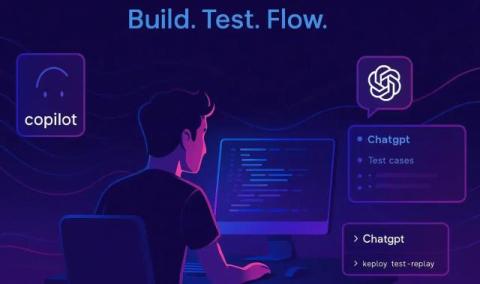
AI isn’t a shortcut to perfect testing. It won’t magically fix your processes or write flawless code. But if used right, it will push testers and developers to think more critically. Instead of asking if AI should be part of testing, the real question is how to make it a true collaborator. That means: Using AI to highlight gaps, not blindly trusting its output Treating it as a thought partner, not an automation machine.

Is manual testing becoming obsolete with advancements in automation and AI?

According to Cristiano Caetano, VP of Product Management at Katalon, human intuition is irreplaceable in this field. It is better to leverage AI for repetitive and labor-intensive tasks while using the freed up bandwidth to focus on strategy - things machines can't replicate. Stay tuned for upcoming episodes in our series!

Best Open Source LLMs in 2025

Open source LLMs continue to compete with proprietary models on performance benchmarks for natural language tasks like text generation, code completion, and reasoning. Despite having fewer resources than closed models, these open LLMs offer cutting-edge AI without the high costs and restrictions of proprietary models. However, running these open-source models in production and at scale remains a challenge.

Using Apache Flink for Model Inference: A Guide for Real-Time AI Applications

As real-time data processing becomes a cornerstone of modern applications, the ability to integrate machine learning model inference with Apache Flink offers developers a powerful tool for on-demand predictions in areas like fraud detection, customer personalization, predictive maintenance, and customer support. Flink enables developers to connect real-time data streams to external machine learning models through remote inference, where models are hosted on dedicated model servers and accessed via APIs.

How Real-Time Data Streaming with GenAI Accelerates Singapore's Smart Nation Vision

In today’s data-driven world, the ability to turn raw data into actionable insights is no longer a nice to have—it’s a necessity to power exemplary citizen service. Singapore’s Smart Nation initiative is built on the idea that data, when utilized effectively, can transform public services and improve lives.

AI as External Imagination

AI isn’t replacing testers—it’s becoming an extension of how they think. Here’s how @Maaret Pyhäjärvi sees it: Applications make us more creative, acting as an “external imagination.” Testers do the same for developers—when devs anticipate tester feedback, their testing improves. AI, when used right, serves a similar role: it challenges us to refine and rethink, not just automate. The real power of AI in testing?Doing the work for usPushing us to think better.