Systems | Development | Analytics | API | Testing

How to Evaluate an AI Test Case Builder for Your QA Workflow

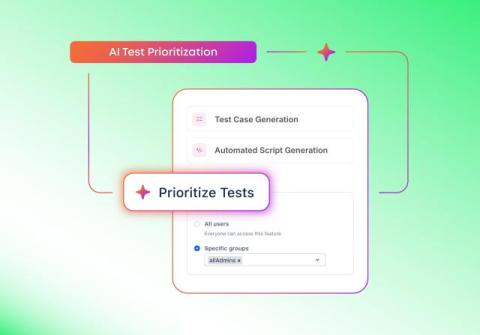
Choosing the right AI test case builder requires evaluating integration depth, not just feature lists. Evaluate AI test case builders based on how they enhance your current workflow rather than how many features they advertise. Your QA team is drowning in test cases. Requirements change daily, releases accelerate weekly, and manual test creation has become the bottleneck everyone acknowledges but nobody has time to fix. An AI test case builder seems like the obvious solution.

Refactor Safely with AI: Using MCP and Traffic Replay to Validate Code Changes

So as software engineers using AI coding assistants, we’re quickly learning of a new anti-pattern: Hallucinated Success. You give your agent (e.g. Claude via terminal or various IDE code assistants) the command “refactor the billing controller.” The agent happily complies, churning out nice clean code. The agent even goes so far as to write a new unit test suite that passes at 100%. You integrate it. Your test suites pass. Your production code breaks. Why?

Why orchestrators become a bottleneck in multi-agent AI

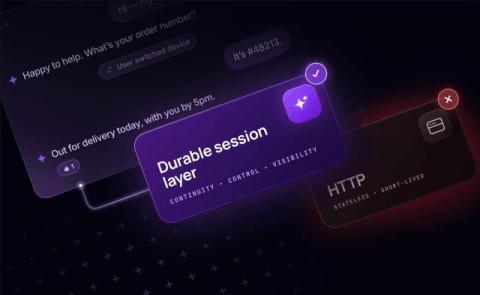
Complex user tasks often need multiple AI agents working together, not just a single assistant. That’s what agent collaboration enables. Each agent has its own specialism - planning, fetching, checking, summarising - and they work in tandem to get the job done. The experience feels intelligent and joined-up, not monolithic or linear. But making that work means more than prompt chaining or orchestration logic.

Qlik: Making Data Work for AI

AI is moving fast, but outcomes still depend on one thing: trusted data, in the right place, at the right time, with the right controls. In this short Qlik story video, you’ll see how we help teams accelerate AI with confidence, turning data into answers you can explain, and actions you can stand behind. From strengthening supply chain decisions, to building a campaign plan in seconds, to spotting changes as they happen, Qlik connects analytics, automation, and governed AI experiences, so AI becomes operational, not experimental.

Making Data Work for AI

AI is not a pilot anymore. In 2026, it is the operating agenda. And if you’re leading a business or an IT project right now, you’re probably getting the same two questions. First: “When do we see real outcomes?” Second: “Can we trust what we’re getting?” Those are fair questions. They’re the right questions. Because the truth is, the model is rarely the problem. The hard part is everything around it. The data. The access. The silos. The controls.

Building for Agentic AI

Our customers’ worlds are complex, and for good reason. It’s multi-cloud. It’s SaaS plus on-prem. It’s Snowflake, Databricks, AWS, Azure, Salesforce, and more. Underneath every one of those choices is the same constraint: data must be accessible, stay current, and stay controlled. The hard part is getting trusted data where it needs to be, when it needs to be there, with the controls to use it responsibly.

Why Deterministic Queries and Stored Procedures Are the Future of AI Data Access

Executive Summary: As enterprises integrate AI and large language models (LLMs) into their data workflows, the need for predictable, secure, and auditable database interactions has never been greater. Deterministic queries—particularly those encapsulated in stored procedures—provide the guardrails necessary for both human analysts and AI systems to access sensitive data safely.

From Excel Hell to AI-Powered Finance: A CEO's Journey to Data-Driven Decision Making

"We were wasting too much time debating the accuracy of numbers as opposed to using that time to make decisions." That's how Satty Saha, Group CEO of CreditInfo-a credit bureau operating across 30+ countries-described the moment he realized his organization had a data problem. Not the kind of data problem you'd expect from a company whose business is data and analytics. An internal data problem.

From Buggy Beginnings to AI-Powered Quality with Cristiano Caetano

Recently, I had the pleasure of sitting down with Cristiano Caetano, VP of Product at Katalon, to explore his journey in software testing. It was a path that began with frustration, evolved through innovation, and now looks toward an exciting AI-driven future. Cristiano's insights shed light not only on his personal career path but also on the broader evolution and future of software testing.