We collect the latest Development, Anaytics, API & Testing news from around the globe and deliver it direct to your inbox. One email per week, no spam.
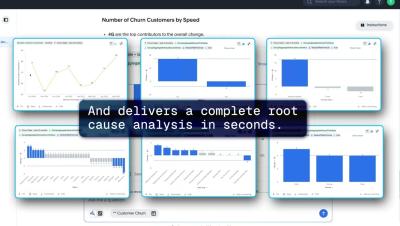
With new AI capabilities, Spotter 3 blends structured and unstructured data, reasons like your best analyst, and turns every question into confident action.
Safaricom, one of the most AI-mature mobile operators, delivers predictive modeling and hyper-personalized financial services to millions of users. But operational challenges were slowing down deployments—limiting their ability to scale and act in real time. In this session, Safaricom’s AI team shares how they: Watch now to learn how they overcame bottlenecks, scaled faster, and unlocked real-time impact at massive scale with the Iguazio technology.
Key takeaways of embedded BI pricing: TL;DR Interested in pricing for Yellowfin? Request a quote. We’ve all been there: you’ve found the perfect solution for your product, but then you get to the pricing page and see a cost or pricing model that makes your jaw drop. That’s the "sticker shock" we want to help you avoid when buying embedded analytics. While the value of embedding BI is clear, not all pricing models are created equal.
Boost query performance by more than 2.5X and reduce storage costs by 50% compared to self-tuned Hive tables, without lifting a finger. Many data teams still need to manually develop and schedule custom tasks to maintain each and every table in their lakehouse, leading to inconsistent query performance and runaway costs.
As an application developer integrating analytics into your application, your users expect a scalable, flexible solution that adapts to changing business needs. While organizations strive to capitalize on new AI tools, they’re also still wrestling with big data: massive, fast-moving datasets that traditional tools can’t handle easily.
Bloated tech spend, data infrastructure a mess, stalled out innovation? You’ve got a data monster. Confluent puts it to work for you with the World’s Data Streaming Platform.
Generative AI copilots are moving from experimental tools to core enterprise solutions. But too often, organizations rush into development, only to discover adoption stalls because the copilot doesn’t solve a specific user problem, lacks trust safeguards, or can’t scale reliably. This guide lays out best practices across the entire lifecycle, from planning and building, to deployment, monitoring, and long-term maintenance.