Hybrid Cloud and Strategic Data Use Accelerate State, Army Missions

Some of the most forward-operational elements of the United States federal government are making strides in leveraging data through hybrid cloud environments—and they’re constantly evaluating progress and recalibrating their approaches along the way. At agencies including the Army and the State Department, work is well underway to find ways of employing emerging technologies that build on cloud services and data optimization to realize new levels of effectiveness.
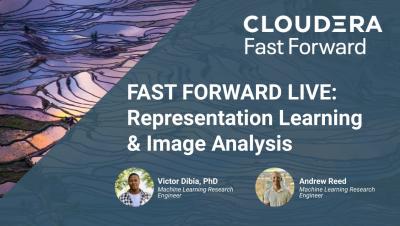
Fast Forward Live: Representation Learning & Image Analysis

Good representations of data (e.g., text, images) are critical for solving many tasks (e.g., search or recommendations). But what exactly are representations, how can they be built and why are deep learning models useful? In this livestream, we will discuss these questions from a software engineering perspective and walk through a live example!

Unlock geospatial insights with Data Studio and BigQuery GIS

Chances are, your data contains information about geographic locations in some form, whether it’s addresses, postal codes, GPS coordinates, or regions that are meaningful to your business. Are you putting this data to work to understand your key metrics from every angle? In the past, you might’ve needed specialized Geographic Information System (GIS) software, but today, these capabilities are built into Google BigQuery.

Speeding up small queries in BigQuery with BI Engine

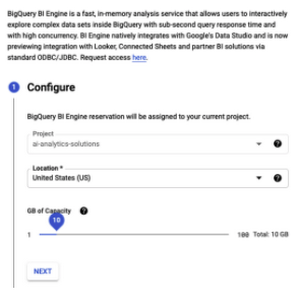
A quick and easy way to speed up small queries in BigQuery (such as to populate interactive applications or dashboards) is to use BI Engine. The New York Times, for example, uses the SQL interface to BI Engine to speed up their Data Reporting Engine. To Illustrate, I’ll use three representative queries on tables between 100 MB and 3 GB — tables that are typically considered smallish by BigQuery standards.

How to strengthen your company's data literacy

Those who use data wisely have competitive advantages and more profits. As a result, companies are increasing their focus on improving their data literacy. For example, the importance of data has led companies like AppNexus1 and Chevron2 to conduct internal data science competitions to identify and hone analytical talent. But, as noted in the kickoff blog post to our series on data-driven organizations, merely having data does not ensure you have a useful interpretation of that data.

Engineering Industry Embracing Qlik's SaaS Analytics to Address Environmental and Sustainability Concerns

Working in the engineering field means navigating a variety of needs. Those range from meeting various local and national regulatory statutes, to measuring and monitoring delivery of essential outputs like drinking water and power supply, to understanding the data surrounding regional operations on both the supply and demand side. Organizations that serve this market operate behind the scenes, yet impact our daily life in the United States.

The Future of Sports Data

I watch sports for a living. I couldn't tell you the last time I watched a baseball game from beginning to end. Data is one of the most valuable resources around. But data is no longer something that languishes in a database to be looked at later. Like sports events, data is now live. The sports industry can reap and build on innovations in the realtime data space. But this is no long a nice-to-have. Driven by changing fan behaviour this is now a commercial imperative.

6 Ways to Lose Sports & Gaming Customers Through Poor Realtime UX

Sports and gaming app users demand an uninterrupted, true realtime experience. Almost 90% of US adults now use a mobile device while watching sports. In competitive arenas with similar offerings, like betting or sports, then you absolutely cannot afford to deliver poor mobile experiences. Customer experience is the new competitive battleground and realtime mobile experiences are an essential part of that.