Fivetran Integrations Highlighted at Google Cloud Next '21
Fivetran integrates seamlessly with multiple Google Cloud services, and the addition of HVR technology will improve the experience.


Fivetran integrates seamlessly with multiple Google Cloud services, and the addition of HVR technology will improve the experience.
DynamoDB is a NoSQL database offered by AWS. It can be a great way to avoid adding load to your primary database when you need tens of thousands of reads/writes per second. In this article, Julie Kent walks us through the basics of using DynamoDB with Rails.
A more agile and efficient infrastructure is key to realizing the cost savings and productivity gains businesses needed to succeed in today’s highly competitive market. Recent surveys by Roger Magoulas & Steve Sawyer, May 19, 2020, show that 88% of enterprises are currently using cloud in some form or another. This adoption is not surprising as clouds have been around now for several decades since Amazon Web Services (AWS) was launched in 2002.
As organizations continue to embrace cloud-based computing as the cornerstone of their digital transformation, the integration platform as a service (iPaaS) has become a critical component of their integration environments. An iPaaS solution simplifies the integration of data, applications, and systems, whether in the cloud or on-premises, through unified support for API, application, data, and B2B integration styles.
“You’re crazy if you don’t start in the cloud; you’re crazy if you stay on it,” quips a recent blog post from Andreessen Horowitz. Many companies are surprised by cloud bills that have shot past their expectations. Indeed, IDC predicts increased investment in public cloud cost management through 2022 as enterprises seek to cut cloud waste by 50%. This is the Cloud Cost Paradox.
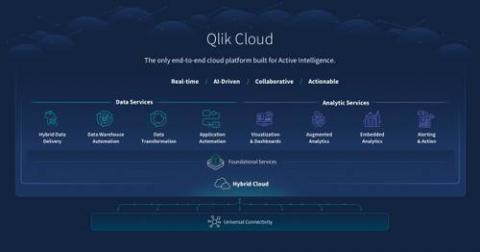
A favorite moment of mine is when I get to share Qlik’s vision for Active Intelligence with a customer for the first time. It usually goes like this: genuine excitement about the possibility – taking informed action in the moment from real-time data…invariably followed by many questions – where do I begin? What do I need? What about the tech stack I have already acquired?