"I have no particular talent, I am just passionately curious"— Albert Einstein When was the last time you thought about optimizing your analytics toolset for curiosity? Yet what is the value of all the data and analytics in the world if not paired with human curiosity?
With the rise of cloud-based and distributed systems, messaging solutions appear to be everywhere. Rather than direct client-server communication, messaging and event-driven architecture allow loosely coupled components to communicate with each other and results in better scalability of the system.
You just finished creating your web application and want to clean it from any possible bugs, imperfections, and performance issues. But you feel a bit overwhelmed with the choice of testing tools and frameworks and the articles singing their praises. In this article, we will explore using Selenium with Python for test automation.
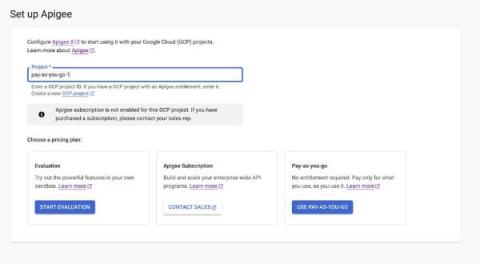
Today’s organizations want stronger alignment between the cost of SaaS solutions and the value derived from these products. As a result, many software companies are looking at adopting consumption-based pricing models as an alternative to subscription models. With consumption-based models, customers only pay for what they use, and usage is tied directly to the value customers derive. Of course, consumption means software companies don’t experience revenue until customers use the solution.
Customer identity and access management (CIAM) has become indispensable for organizations. According to an article by the Business Research Company, the CIAM market is expected to reach $45.56 billion in 2025, at a compound annual growth rate of 18.6%. The research firm adds that the increasing use of Internet of Things (IoT) devices — such as smartphones, smartwatches, smart homes and medical sensors — will be the primary driving factor for this growth.
Keeping software testing processes on track is an overarching goal every QA lead wants for their team. Yet, development projects aren’t always plain sailing. No one wants unhappy clients, and, worse, overworked QA engineers and developers. We all have to accept that activities don’t always stick to the initial planning. Requirements change near the final stages, feature requests are unclear to business values, leaving little time for critical areas to get tested.
We are thrilled to welcome Tuist on our list of Verified Steps. Read how you can incorporate the new Step into your Bitrise Workflow to create, mantain and interact with your Xcode projects a lot more effectively.