Systems | Development | Analytics | API | Testing

Part 1: Building a Production-Grade Traffic Capture and Replay System

A few years ago I was on call during the Super Bowl. At the time I was working for an observability vendor and one of our customers had an outage caused by a surge in user traffic. But our monitoring system didn’t have enough data to know what went wrong and I sat on a call for 2 hours painfully listening to them spinning up more servers and trying to catch up with the user load.

What ADA Compliance Means for Government Software

Accessibility for constituents isn’t just about ramps and elevators—it’s also about technology. As more government services and operations move online, ensuring digital accessibility is just as important as ensuring physical spaces are accessible. Under Title II of the Americans with Disabilities Act (ADA), state and local governments are required to provide equal access to all programs, services, and activities for people with disabilities.

Just Say No to AI: Why Our Content Will Remain Human-Authored

At WSO2, our content is grounded in original thinking and hard-earned lessons from building real enterprise systems with our products. We apply first principles to shape our perspective on our strategy and forward thinking. No model can replace this experience. AI is valuable when used by thoughtful authors, but alone it does not deliver meaningful value to our readers, customers, or community.

Levels of Autonomy in Software Development: Closing the Gap Between Creation and Confidence

When the automotive industry introduced the concept of Levels of Autonomy, it gave us a shared language for something profound. It wasn’t just about self-driving cars, it was about how humans and intelligent systems work together as execution gradually shifts from one participant to the other. Level 0 is full human control. Level 5 means the car can handle any situation on its own. And between those two extremes are a series of stages that capture both technological progress and human adaptation.

Beyond User-Based Pricing: How Flexible Analytics Licensing Accelerates Growth

You’re building the next generation of your product, but you’re not sure whether embedding analytics is the right move. The demand is clear: According to insightsoftware and Hanover Research’s Embedded Analytics Report, self-service analytics and managed dashboards are of key importance for nearly all embedded analytics buyers, in large part because customers expect data insights, dashboards, and reporting built right into your application.

Best Tools for API Compression and Serialization

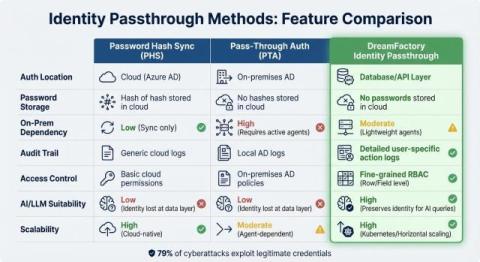
In the world of APIs and microservices, choosing the right tools for data compression and serialization can drastically improve performance, reduce bandwidth costs, and streamline communication. Here's a quick breakdown of five popular tools and their strengths: DreamFactory: Simplifies API creation with automated JSON serialization, strong security features, and support for over 20 databases.

How to Automate E-commerce Webhooks with Low-Code Tools

Manual data handoffs, stale batch jobs, and brittle polling loops quietly erode margins in e-commerce. Orders, payments, and tickets arrive continuously, but the systems that should react—inventory, fulfillment, accounting, CRM—often lag. Webhooks fix the core bottleneck by pushing events when they happen instead of making your apps pull and check on a schedule. The result is fresher data, fewer race conditions, and leaner infrastructure.

Expert tips to speed up your iOS builds

Spend less time waiting and more time doing the work you love! One of the defining moments of my software career was learning the motto “if it hurts, do it more.” What the heck? This concept feels totally counterintuitive. But give it a moment’s thought, and you soon realize that as developers we are instructed to lean into the bad parts of our process so that we fix them and make them stop hurting.

Debugging Without a Net: The Pain of Reproducing Production Issues

Every engineer has been there — a late-night page, a broken feature in production, and no clear way to reproduce it. The logs are vague. The metrics look normal. Your local environment works fine. Yet something somewhere is failing for real users. So begins the detective work — debugging a live system with almost no tools, no perfect test data, and no clone of production.