Systems | Development | Analytics | API | Testing

Roles and Responsibilities of a Test Manager

A test manager plays a crucial role in ensuring that software products meet the highest quality standards before they reach users. This role is about more than just running tests. It involves planning, strategy, leadership, and close collaboration with teams across the organization. The roles and responsibilities of a test manager cover many areas of software quality. They define the test strategy, manage QA teams, oversee test execution, and report on progress to stakeholders.

Defect Management in Software Testing: A Complete Guide

Defect management is at the core of every quality software release. It is how QA teams capture, track, and resolve bugs before they reach end users. A structured process ensures that every defect is recorded, prioritized, and resolved in a way that improves collaboration and product quality. Understanding Defect Management is critical for any team aiming to deliver stable and reliable software.

ClickHouse ETL Tools: Fast Column-Store Integration Options

ClickHouse has emerged as the world's fastest analytical database, processing billions of rows per second for companies like Uber, Cloudflare, and Spotify. This open-source columnar database excels at real-time analytics, but its unique architecture creates specific ETL challenges that traditional data integration tools struggle to address effectively.

Apache Druid ETL Tools: Streaming & Batch Connectors Reviewed

Apache Druid has emerged as the go-to solution for organizations requiring lightning-fast analytics on massive datasets. According to the Apache Druid ingestion documentation, this distributed, column-oriented database combines concepts from data warehouses, time-series databases, and search systems to deliver sub-second query performance on trillions of rows.

AI Agent Is Hitting Your APIs - Are You Ready?

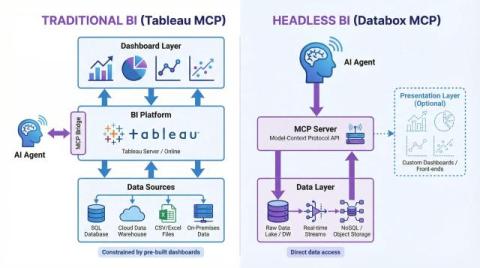
It’s no longer theoretical – artificial intelligence has left research labs and entered production systems, generating a new breed of consumers – autonomous and intelligent agents. These autonomous AI agents are increasingly interacting with real-world APIs (application programming interfaces), which are sets of protocols and tools for building and integrating software applications.

Best DevOps Automation Tools In 2025

Software teams have to move quickly, deliver perfectly, and be able to adapt to changes right away in today’s fast-paced world. The bar is high: regular updates, few bugs, and no downtime. Are you trying to do all of this by hand? That’s a sure way to get burned out and stuck. That’s where automation tools for DevOps come in. These tools don’t want to take our jobs; they want to make us stronger.

What is Low-Code Automation Testing? A Practical Guide

Low-code automation testing is changing the way teams build and maintain tests. With less scripting, intuitive visual tools, and reusable components, testers can work faster and collaborate better, no matter their coding background. It’s no longer just for QA engineers. With modular low-code components, visual test logic, and hybrid test creation, developers, testers, and business analysts can all contribute to quality. The process becomes faster, more inclusive, and easier to scale.

The Platform Shift, Through a Tester's Eyes

When Katalon decided to adopt its own platform internally, it reshaped the daily reality for every Quality Engineer on the ground. The tools we used, the way we collaborated, and how we measured success all changed. Some parts got easier. Others challenged our habits. But through it all, we came out with a clearer view of what a unified platform really means for testers. Here’s how the shift looked from the ground level.

What We Learned by Stress-Testing Katalon on Ourselves

When we committed to using Katalon for all our internal testing, we didn’t do it because it was perfect. We did it because it wasn’t. We wanted to see what would happen if we pushed the platform to its limits—used it not just in ideal conditions, but in the messy, nuanced, high-urgency workflows of a real QE team. No backup tools. No shortcuts. Just us, our product, and the problems we hadn’t yet solved. And what happened? We broke things. We hacked around limitations.

How is Telemedicine App Development making an impact in the Healthcare Industry?

Telemedicine app development is a trend that has taken the digital healthcare world by storm! And, we’re not joking about this because it’s the reality of today, tomorrow, and beyond the healthcare industry! So, what do you imagine when you think of telemedicine in general? A consultation app? Possibly some kind of a tidbit related to new offers or something like that? However, we can assure you that there is so much more to telemedicine than meets the eye.