We collect the latest Development, Anaytics, API & Testing news from around the globe and deliver it direct to your inbox. One email per week, no spam.
Google just released A2A (Agent2Agent)—a new open protocol for agent to agent communication—and it left people wondering if they just started a protocol war against MCP (Model Context Protocol).
Databricks helps companies process large-scale data, and Databricks data masking ensures high-quality, compliant data. If your organization relies on data for AI/ML or analytics, it’s essential to ensure you are implementing a robust, compliant data masking strategy. Let’s explore how data masking works natively in Databricks. Then, we’ll go over challenges teams might run into in using native masking capabilities.
What if you could analyze real-time and historical data with just a few clicks and minimal code? Whether you're a data scientist, engineer, or analyst working in Python, you don't need to be an Apache Kafka expert to unlock the power of streaming analytics. In this blog, we'll walk you through integrating Confluent Tableflow with Trino, which will enable you to query and visualize Apache Iceberg tables effortlessly in Jupyter Notebooks.
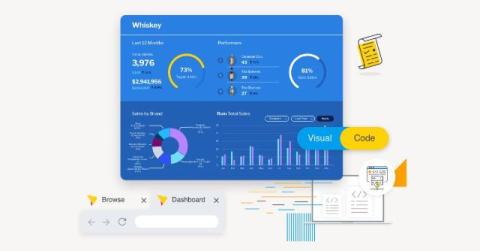
A well-designed dashboard can be the difference between decision-making at a glance — and getting lost in a sea of data. But with so many variables—users, data sources, visualizations, devices—it’s easy to end up with dashboard designs that look good but don’t deliver meaningful insights. This guide is your end-to-end playbook for creating dashboards that are not only beautiful, but also smart, scalable, and user-friendly.
DreamFactory's GitHub repository turns 10 this month, marking a decade of innovation in API generation. To commemorate this milestone, we'll be launching our new MCP Server along with new Attribute Based Access Controls (ABAC) and a Command Line Interface (CLI) to help every organization make the leap into the AI era.
Over 70% of enterprise data is stuck in legacy systems - making automation a challenge. DreamFactory and Zapier solve this by connecting outdated databases to modern tools, enabling businesses to unlock their data and automate workflows.
Imagine for a moment that a user is engrossed in navigating a new website and comes across a function that isn't performing as it should. They want to give feedback, but words often fall short of expressing the precise issue they encountered. What if the user could capture the problem in action, provide a voiceover of their thoughts, and share them with the developers for a more effective resolution? That’s where video feedback fills the void.
In the prior blog, we previewed some of the reasons that we settled on using Anthropic’s Computer Using Agent (CUA) over other alternatives and promised to provide more information as to what and why, with facts and figures. If you haven’t read that blog, check it out here. In this blog, I hope we can bring to light some of the “why” behind our decisions, and what makes our agentic AI so powerful.