Systems | Development | Analytics | API | Testing

How to Choose Between Server-Side and Web-Based Reporting

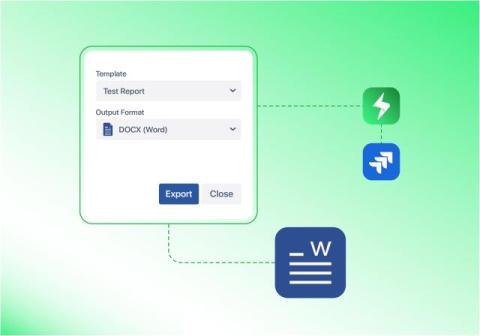
Any time an organization closes the books or practices the governance needed to meet regulatory demand, it relies on reporting. Reporting technology is designed to save time while increasing accuracy, but many long-standing reporting vendors are existing or de-emphasizing this still-essential space. This leaves a gap for teams that need a modern, production-grade reporting solution. And when choosing between reporting tools, architecture is important.

5 Lessons learned building a web application crawler

Building a web application crawler came with plenty of challenges—here’s what we learned. Recently, we built a web application crawler from scratch—which had some scratching their heads, asking why we’d undertake such a thing. Here’s our answer to that, plus some interesting technical challenges we ran into and how we tackled them.
Sponsored Post

What AI Has Never Seen: The Context Gap in Code Generation

Your AI coding assistant has read the entire internet. It knows every programming language, every framework, every best practice documented in Stack Overflow answers and GitHub repositories. It can generate a REST API handler in seconds that looks perfect with clean code, proper error handling, following all the patterns. But here's what it's never seen: your production traffic. Data from a real API request. Someone filling out a form with messed up or incomplete data. AI is changing how we write and test code, but there's a fundamental gap between training data and production reality.

Silent Failures: Why AI Code Breaks in Production

You ship a small “safe” change on Friday. The diff is tiny, the tests are green, and the AI assistant was confident. An hour after deploy, your on-call channel lights up. A downstream service is rejecting responses that look fine in code review. Now you’re rolling back and rewriting a fix that should have been obvious if you had real traffic in the loop. This isn’t a hypothetical.

How to Prioritize AI Investments Using the Impact-Maturity Matrix?

AI is no longer an experimental line item in the budget. For most U.S. CXOs, the real challenge in 2026 is far more practical: where should we place our bets first? With dozens of AI use cases competing for attention, capital, and executive sponsorship, prioritization has become a boardroom conversation, not a lab discussion. Are you investing in AI initiatives that can move the needle this fiscal year, or are you spreading resources thin across pilots that never scale?

Are Your APIs Ready for AI? Preparing Your Landscape for Intelligent Consumption

Getting APIs to work with AI has become one of the major themes in the API space recently. And that’s not surprising because APIs are at the core of an AI’s ability to reach out into the world, to get access to data and information, and to invoke commands and workflows to act. This was always what APIs were for, but in this article we will dive a little deeper what that evolution looks like, and what that means for API governance and management.

What is Semantic Caching?

When we think of a typical API, part of a production-ready setup generally includes a cache. This cache allows for similar requests to be served without having to do the entire roundtrip. But when it comes to AI applications powered by large language models, traditional caching falls short. This is because queries to an AI endpoint may look different in terms of how things are worded or phrased but actually mean the same thing semantically.

You don't have to choose between GitHub and Bitrise

If you're part of a GitHub shop evaluating Bitrise for your mobile app teams, you might be hearing a familiar objection: "Why add another tool? GitHub Actions is our org standard, and it will work for mobile." It's a reasonable point. Nobody wants to maintain a snowflake system that sits outside the approved tool list. But here's the thing — it doesn't have to be GitHub Actions *or* Bitrise. The reality is that mobile CI/CD has unique demands.

On-Prem Enterprise Alternatives to Cloud-Hosted AI Dev Tools | DreamFactory

This guide explains how enterprises can replace cloud-hosted AI developer tools with secure, on-prem alternatives. It covers architectures, governance, and selection criteria that meet compliance and performance goals. You will learn how teams stand up private code assistants, model gateways, vector search, and policy controls behind the firewall.