We collect the latest Development, Anaytics, API & Testing news from around the globe and deliver it direct to your inbox. One email per week, no spam.
Partnering with LaunchDarkly, we’ve integrated feature flags into Release Management, bringing you a more transparent and centralized solution for your mobile app releases.
We talk a lot about how customers can use Confluent as the data backbone for event streaming applications and enable a new class of event-driven microservices by completely decoupling services from one another. With Confluent, organizations can rapidly build and deploy business applications with greater flexibility, support larger scale, and be more responsive to customer demands. But we don’t just talk about it, we do it ourselves as Confluent’s “Customer Zero”!
As SmartBear's Chief Product Officer, I'm thrilled about our acquisition of Reflect, a Generative AI-powered no-code testing platform. Here's why: This is just the beginning of an exciting new chapter, and we can't wait to see the innovative solutions we build together.
Exploratory testing involves testing system behavior under various scenarios, with a predefined goal but no predefined tests. This focus on discovering the unknown makes exploratory testing both powerful and challenging. “Exploratory testing is a systematic approach for discovering risks using rigorous analysis techniques coupled with testing heuristics.” Elisabeth Hendrickson.
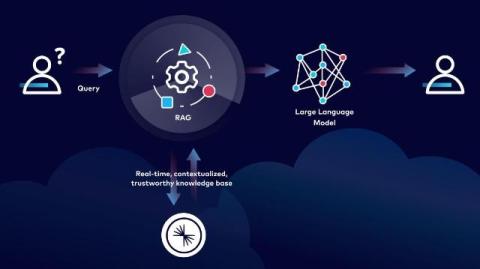
This year may be the most innovative on record. Recent advances in AI are beginning to transform how we live and work. And the potential impacts of artificial intelligence (AI) on the healthcare and life sciences industries are expected to be far-reaching. It’s essential for organizations to leverage vast amounts of structured and unstructured data for effective generative AI (gen AI) solutions that deliver a clear return on investment.
Hasura is known for its ability to rapidly create and manage GraphQL APIs. However, it’s always beneficial to explore alternatives that might better suit your project needs. In this post, we’ll delve into nine Hasura Alternatives, each offering unique features and advantages. From cloud-based solutions to open-source platforms, we cover a range of options to help you find the perfect fit for your API development needs. Here are the four main points from this article: Table of Contents.
January 28th is Data Privacy Day, an international effort to empower individuals and encourage businesses to respect privacy, safeguard personal data and enable trust. In fact, it so important that the National Cybersecurity Alliance has a focused program for a full week. Data privacy is not just a legal concern, it concerns everyone.
In the rapidly emerging artificial intelligence economy, organizations will split into two groups: those who are good at AI and those who are bad at business. Most experts agree that AI won’t replace humans, but instead augment us in a world of mixed autonomy. You’ll need new structures to harness AI’s transformative potential while managing its very real risks—the biggest of which is data privacy. So how can leaders handle AI and privacy risks?
The operating system is like the boss of your computer, handling security, networking, and keeping an eye on what’s happening. But tweaking or improving the core part of the operating system, called the kernel, is a bit tricky because it’s mainly focused on keeping things stable and secure. Most cool new stuff usually happens outside the core system, in what we call the user space. That’s where people add extra features or functions.
As blockchain networks specialize, interoperability between chains has become integral to scalability. Bridges enable disconnected cryptocurrency protocols to communicate and share data or assets seamlessly. This article explores the technical workings of blockchain bridges and innovations like Defi Way pushing the envelope in decentralized interoperability.