Systems | Development | Analytics | API | Testing

What's New in Confluent Clients for Kafka: Python Async GA, Schema Registry Upgrades

Hey, fellow Apache Kafka developers! It’s time for another update on the Confluent client ecosystem. Following our recent architectural milestones, we’re excited to announce the release of librdkafka 2.13.0, which powers the latest versions of our Python, JavaScript, .NET, Go, and C/C++ clients. In this release, you’ll find numerous improvements to the Python experience as well as critical security and Schema Registry enhancements for everyone.

How to Extend and Harden Legacy APIs Without Rewriting Them | DreamFactory

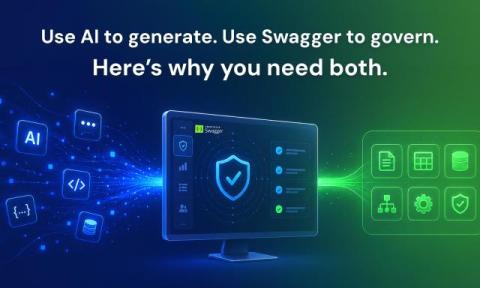
This guide explains how to add caching, rate limiting, role-based filtering, and clean separation of logic to legacy APIs without changing backend code. You will learn a practical abstraction-layer approach that lets teams govern access, enforce policy, and improve performance while keeping stored procedures and services intact.

API Composition and Packaging: Making Sense of APIs in the Enterprise Environment

Modern enterprise platforms rarely exist as clean, well-factored systems. They evolve over years or sometimes decades, through acquisitions, reorgs, rewrites, and urgent business priorities. What you’re left with is not a single, unified architecture. It's layer upon layer of architectural decisions made under different leadership, different constraints, and different market conditions.

From Pixels to APIs: The Programmable Economy is the Agentic Economy

The APIs that have been powering websites and apps created a massive market, but there are only up to 8 billion humans consuming them behind pixels. As LLMs are taking over the world — in the form of productized agents first — there will be 100X more machines than humans. The internet built for agents will look very different. Agents don't need to see, scroll, and click graphical interfaces. They can access the internet programmatically.

Why Native Observability is the Heart of Hybrid Cloud

In the current enterprise technology landscape, we’re witnessing an industry-wide scramble. As organizations shift from monolithic architectures to complex environments leveraging heterogeneous infrastructures, cloud-based data platforms are hitting a visibility—i.e., observability—wall. Their response has been a wave of reactive, multi-billion-dollar acquisitions designed to "bolt-on" the observability that they lack natively.

Setting Up a GCC in India: A Strategic Playbook for Enterprises

An important question for CXOs and strategy heads alike arises as businesses grow internationally: Are we scaling globally merely to increase capacity, or are we also building capability? Global Capability Centres (GCCs), formerly known as Global In-House Centres (GICs), fill that need by acting as strategic powerhouses that are more than just back-end support engines.

Types Of Software Testing: A Comprehensive Guide (2026)

The types of software testing define how modern systems maintain stability, performance, and security in fast release cycles. In 2026, software is API-driven and continuously deployed, so testing is no longer a final step – it is embedded across the development lifecycle. Each testing type addresses specific risks and helps teams build a strong foundation of software testing instead of relying on random test cases. Let’s explore how these testing types work in practice.

Kafka Copy Paste (KCP): How to Migrate to Confluent Cloud in Days, Not Weeks

While Apache Kafka is incredibly powerful, self-managing brokers, upgrades, capacity, security, and incidents can quickly distract teams from what matters most: building real-time applications and delivering business value. Confluent Cloud can remove that operational burden, yet migration can still be seen as risky and tedious.