Systems | Development | Analytics | API | Testing

Maintaining the Vibes: How to Turn AI Coding into Enterprise Value

We are living through a renaissance in software development. In February 2025, computer scientist Andrej Karpathy coined the term "vibe coding" to describe a new state of human-computer interaction. In this model, developers stop acting like bricklayers—manually laying every line of syntax—and start acting like architects. They design the outcome with natural language, and AI handles the construction, translating their vision into working software.

Maintaining compliance when adopting AI in regulated industries

Key Takeaway: Organizations in regulated industries can adopt AI without compromising compliance. Automated testing enables continuous validation of AI-enabled systems while maintaining the predictability, documentation, and audit-readiness that regulators require. In compliance-first industries, such as banking, healthcare, or telecommunications, AI adoption is rarely a simple technology decision. You are often caught between two competing pressures.

Designing Unified APIs for Customer UIs & Internal Tools with Clean Permissions | DreamFactory

A unified API serves both external users and internal operators from one contract while enforcing different capabilities and data scopes. It centralizes authentication, authorization, validation, and auditing so every consumer follows the same rules. DreamFactory defines this as one surface with segmented access aligned to jobs-to-be-done. The goal is consistent behavior across channels, fewer duplicated services, and easier change management.

In the Context Economy, Context is King

Gartner published a report last week that I think marks a genuine inflection point for how enterprise technology leaders should think about AI strategy. The headline finding: we have crossed a threshold where competitive advantage in the AI era is no longer about access to data — it's about the semantic intelligence wrapped around it. Gartner calls this the "context economy," and they believe it will reshape how software is built, sold, and monetized over the next several years. I agree.

Gartner Just Described the Platform Enterprises Need to Compete in the Context Economy, Kong Already Built It

A Response to Gartner’s Latest Research Last week, Gartner published a report titled MCP Servers Will Fuel the Next AI Revenue Surge — Context as a Service (1) that should be required reading for every enterprise technology leader. Then, Kong CEO Augusto Marietti (Aghi for short) wrote out his thoughts on the subject and why context is king. I’d like to continue that conversation.

Kotlin Annotations Explained: Guide for Android Developers

Kotlin annotations allow compilers or libraries to understand our code. These metadata tags don’t directly change code logic, but they help modify how it is interpreted, optimized, or validated. This simplifies Android development by automating repetitive tasks and ensuring consistent code behavior. It also improves code readability, reduces boilerplate code, and introduces automated checks and generation.

How to Break Off Your First Microservice

The road from monolithic architecture to cloud-native, microservices application is rarely a straightforward engineering exercise. There's often a significant gap between understanding the theoretical benefits of microservices and successfully extracting each service from a mature, long-running codebase. Many teams exploring microservices migration struggle most with the first extraction. How do you make that initial step concrete, low-risk, and reversible?

Analytics for the AI Era, Reimagined with Data Products

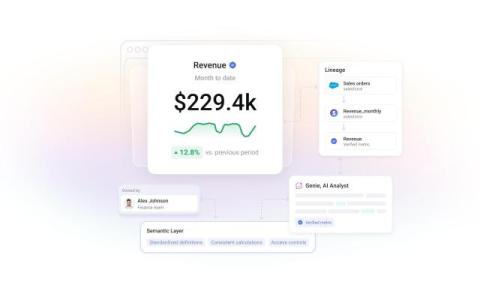
I spend a lot of time with customers and partners, and the pattern is consistent. Everyone wants the benefits of AI, faster decisions, more automation, better productivity. But the thing that slows them down is not the model. It’s the data underneath it. Not just any data, but trusted data to drive trustworthy business outcomes. As soon as you move from AI that explains to AI that influences workflows, ambiguity stops being an inconvenience. It becomes a liability.

Running OpenClaw Responsibly in Production | DreamFactory

OpenClaw adoption is accelerating fast, and so are the security incidents. Within two weeks of broad adoption, over 42,000 gateway instances were found exposed to the public internet with no authentication. Nearly all of them had authentication bypasses. Eight were completely open with full shell access. Meanwhile, 341 malicious skills were confirmed on ClawHub, and infostealers like RedLine and Lumma are already targeting OpenClaw installations to harvest API keys.

Why Python is Dominating High-Performance Computing

High-Performance Computing (HPC) has traditionally been an exclusive club. If you wanted to run massive simulations or crunch petabytes of data, you had to leverage the predominant languages used on supercomputing hardware—usually C, C++, or Fortran. Although fast and efficient, these languages demand strict memory management and complex syntax that require strong software development skills. Without them, development time can slow down significantly. But the landscape is shifting.