Systems | Development | Analytics | API | Testing

How to Consolidate Reporting Across Multiple ERPs Without Migrating Any of Them

Most multi-entity businesses do not choose their accounting systems. They inherit them. A new acquisition brings Xero. The legacy entity has been on Dynamics for eight years. The Czech subsidiary runs on ABRA Flexi and nobody is going near it. Your US portco uses QuickBooks, your UK one uses Sage Intacct, and the newest deal came with a NetSuite instance that the previous owner had half-implemented. You are not looking at a technology problem. You are looking at the reality of how groups grow.

Driving mission success with automated testing

Citizens today compare government digital services to the best experiences they have in the private sector. A missed benefit payment. A tax portal that crashes during filing season. A license renewal that takes weeks instead of minutes. Today, software failures aren’t just IT problems, they’re public trust problems, and many state and local agencies are struggling to deliver digital services quickly, effectively, and consistently.

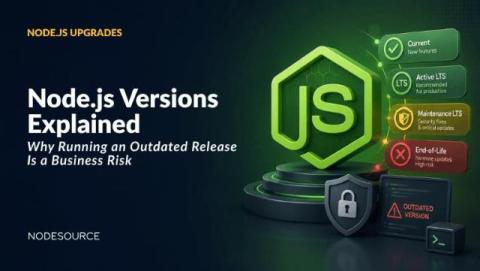
Node.js Versions Explained: Why Running an Outdated Release Is a Business Risk

A Node.js application can continue starting, accepting traffic, and passing health checks long after the runtime underneath it has become unsupported. That creates a dangerous assumption: In reality, “running” and “supported” are two very different states. A Node.js release is more than a JavaScript executable.

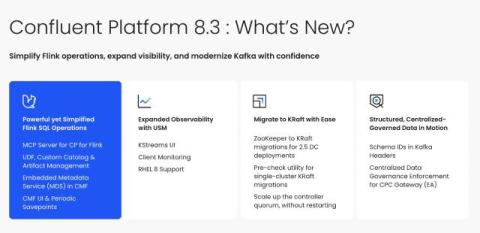
Announcing Confluent Platform 8.3: Powerful Apache Flink SQL operations, Easier KRaft Migrations, Expanded Monitoring and more.

Platform teams want to maximize the value of data in motion, but separate workstreams for stream processing, monitoring, KRaft migrations, and data governance create friction as environments grow. As a result, teams spend more time managing operational overhead and less time building. Today, we’re excited to announce Confluent Platform (CP) 8.3.0, built on Apache Kafka 4.3.0, reinforcing our core capabilities as a data streaming platform.

Orchestrating Runtime Resilience: The Definitive Guide to Self-Healing Test Frameworks

Enterprise teams depend on automated testing to sustain rapid release cycles, yet scaling quickly reveals a major bottleneck: the maintenance footprint. Consider a financial enterprise running a nightly regression suite of 3,000 scripts. A developer updates the checkout UI, renaming a submit button’s class from-submit to-primary. The core payment logic stays completely untouched, yet 400 test cases fail overnight.

AI Debugging: How to Use AI to Find and Fix Bugs Faster

At its simplest, AI debugging automates repetitive coding tasks like searching logs, reading stack traces and comparing sessions. But good AI debugging is a much more challenging concept that relies on focused context, runtime evidence and structured investigation paths. In this post we’ll show you how to debug with AI, not just productively but also responsibly. Let’s get into it.