Systems | Development | Analytics | API | Testing

Insurance API Integration: 7 Platforms for Connecting Carriers, TPAs, and Insurtechs

Insurance companies face a unique data integration challenge that most generic platforms cannot solve. Your benefits administration platform may connect via REST API to modern HR systems, while another partner still sends eligibility files over SFTP. Enrollment and eligibility workflows commonly use EDI 834 transactions, while claims workflows may involve X12 837 claims and 835 remittance data.


Why Infrastructure Platform Consumption Services Matter Now

During the past year, AI has transformed the infrastructure market. Organizations are rapidly expanding data center and cloud capacity to support new AI workloads, while facing growing pressure to manage cyber risk, control costs, and demonstrate measurable business value. As infrastructure investments increase, technology leaders must balance innovation with operational efficiency and financial accountability.

Wherever your config lives: Repo-stored and modular bitrise.yml

Most CI tooling makes you pick a side. Visual editing or code. Git as your source of truth or a decent place to edit. A config small enough for one file, or a modular structure your tooling flattens the moment you touch it. The Bitrise Workflow Editor does not ask you to choose. It meets your config where it lives. One file or forty, stored on Bitrise or in your repo. This post covers both, in that order.

Why Real Estate Data Doesn't Match: Causes and How to Fix It

Quick answer: Real estate data often differs across systems because MLS, PMS, CRM, and ERP platforms use different identifiers, schemas, formats, and update rules to represent the same property. Fixing it isn’t a one-time cleanup. It requires a reconciliation capability: identify candidate matches, normalize values, validate them, enrich missing fields, consolidate confirmed duplicates, resolve source priority when systems disagree, and monitor for new inconsistencies as records change.

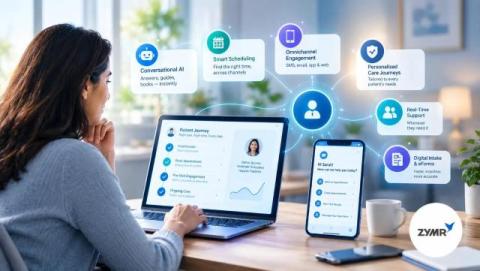
Top Care Journey Orchestration Tools for Patient Engagement

Care journey orchestration tools connect patient communication with scheduling, care instructions, and follow-up workflows. They use available patient information and configured rules to guide actions across care stages. Depending on the tool, patient responses can trigger scheduling, additional guidance, or care team alerts. The goal is engagement that produces action.

Best AI Video Tools for Software Demo and Team Marketing Workflows

Sponsored by Magic Hour. This article was prepared with AI assistance. It compares documented product capabilities and practical workflow considerations; it does not report hands-on tests, measured performance, or a universal ranking. Choosing an AI video tool is partly a creative decision and partly a systems decision. A clip must look appropriate, but a marketing team also needs to know where its inputs came from, how the result will be reviewed, and whether another colleague can reproduce the process. An impressive demo answers only one of those questions.

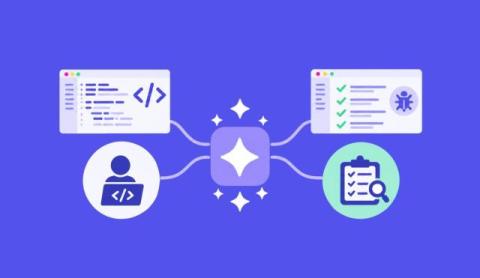
AI Gave Developers More Capacity. Testers Are Next.

Talk to any developer who has been using an AI coding assistant for a few months, and you'll hear some version of the same thing: "I'm getting through a lot more than I used to." Same person. Same hours. More output. Now ask a QA manager how they're keeping up with all that extra output. You'll usually get a tired laugh, followed by: I'm not. And I can't hire. That's the gap I want to talk about. Development is finding ways to grow its capacity without growing the team.

App Maintenance and Continuous Updates: What Ongoing Software Maintenance Really Requires

A production release is not the end of engineering work on a product. It is the point where the software starts living in an environment it doesn’t control. Operating systems ship new versions, dependencies get patched or deprecated, third-party APIs change their contracts, traffic grows, and newly disclosed vulnerabilities turn yesterday’s safe code into today’s exposure.

Production Debugging: A Complete Guide to Fixing Live Bugs

We’ve all had this problem as developers. An app works perfectly fine in our own local environment, but as soon as it hits the real world it starts throwing glitches all over town. Why does this happen? Because the real world is messy and hard to predict. Some bugs are only triggered by real users, real devices, and real data. This makes them harder to diagnose – but not impossible.