
Systems | Development | Analytics | API | Testing

Usability Testing for Better UX: Fixing Real-World Design Friction

After two decades in quality engineering, you learn that passing test runs can lie. Pipelines turn green, unit suites hit target coverage numbers, and servers return clean HTTP 200 codes. Then the build lands in front of live users, and adoption falls flat. People get stuck on form fields, miss primary actions, and abandon checkouts. The code works, but the product fails. Functional testing proves an engine runs.
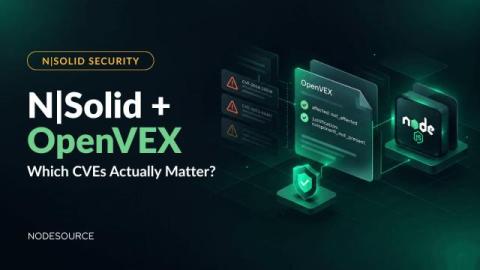

Not Every CVE Is Exploitable: How N|Solid Uses OpenVEX to Add Security Context

Finding a vulnerability is only the beginning. Modern applications depend on hundreds or even thousands of software components, and vulnerability scanners are essential for identifying known security issues across those dependencies. But there is a problem: the presence of a vulnerable dependency does not always mean your application is actually exploitable.

Digital Front Door Platforms: Key Features and How to Evaluate Them

‍ A digital front door platform connects patient-facing services with clinical and administrative workflows. Capabilities can include appointment scheduling, digital intake, patient communication, insurance verification, and payments. Coverage varies by vendor, product configuration, and supported electronic health record (EHR) integrations. Evaluating a digital front door (DFD) solution should cover complete workflows, integration depth, usability, security, and total operating costs.

Digital Front Door Strategy: A Framework for Health Systems

‍ A digital front door strategy coordinates patient access, engagement, and supporting health system workflows. It connects provider search, scheduling, registration, payments, and follow-up through integrated digital services. Effective digital front door (DFD) implementation requires EHR integration, accessible interfaces, secure data exchange, and clear operational ownership.

Convert Manual Test Cases to Automation Without Starting From Scratch

Your manual test library is more than documentation. It contains years of decisions about what your product should do, and how to tell when it doesn't. That knowledge is a valuable starting point for automation, not something you should have to recreate from scratch. The clearest example came up in a customer conversation. The head of quality at a fast-growing fintech told me his company pays an outside firm to run its manual regression, with a bill for every test executed.

How to Manage and Secure AI Coding Agents

AI coding tool spend is projected to top $13 billion in 2026, compounding at more than 60% a year. These agents don't just autocomplete a line of code anymore. They plan. They act. They call tools, run commands, and touch other systems on your behalf. This is pretty different from the assistant that used to live in your IDE sidebar. And that's exactly where the risk lives. An AI coding agent is software that writes, tests, and ships code independently. This level of autonomy earlier tools never had.

API + AI Summit 2026 Recap: Helping the World Move AI

That's a wrap on API + AI Summit 2026, Kong's biggest in-person event yet. The event brought together more than 1,000 engineers, architects, and leaders in Los Angeles to discuss running AI systems in production, tackle shared architecture challenges, and swap real-world insights. Recordings from this year’s event will be available in the coming weeks..

How to Use Shoulda Matchers with RSpec for Ruby on Rails

shoulda-matchers gives you one-line RSpec and Minitest matchers for common Rails behavior — it { should validate_presence_of(:name) } replaces a hand-written validation spec. Add gem "shoulda-matchers", "~> 8.0" to your Gemfile’s test group, then add the configuration block to spec/rails_helper.rb naming your test framework and library. Version 8 works with Rails 8.1 and rspec-rails 8.

Top ESG Software Companies for US Sustainability Reporting in 2026

Ask a sustainability team what slowed their last disclosure and the answer is usually mundane: inconsistent units, missing supplier records, emission factors applied three different ways across four business units, and no audit trail explaining why a number changed between drafts.

Reducing GitHub reliability risk for tool installs

You’ve probably encountered the online conversations about GitHub’s AI scaling challenges. A lot of the chatter is about how forgiving (or not) users should be to GitHub in light of inexorable traffic increases but also GitHub’s own decision-making. There is certainly irony in the fact that it was a swashbuckling GitHub, against the objections of many open source developers, that pressed Copilot on the industry.