Systems | Development | Analytics | API | Testing

Why Data Teams Are Best-Positioned For Agentic AI Success With Data Integration and MCPs

Building AI agents is the first step, and it’s positive to see enterprises exploring this avenue. But it’s only the first step. For true enterprise value, these agents must seamlessly connect to your data ecosystem through robust integration, standardized protocols, and be guided by knowledgeable data teams. The need to give AI agents access to data and connect them to the necessary tools and functions has led to the creation of the Model Context Protocol (MCP).

A Vision for the Future: Qlik's New Agentic AI Experience

The future of data and analytics will be nothing like the experience we're used to today. We are at the beginning of a transformation that will fundamentally reshape how businesses use data, make decisions, and create value. At the center of this revolution is Agentic AI. Agentic AI fundamentally changes the way we work with data – moving from passive, reactive AI systems to autonomous, goal-oriented agents capable of reasoning, planning, and executing complex tasks across diverse data landscapes.

What's New in ClearML v3.25: Vector Database support, Smarter Orchestration, and UI Enhancements

ClearML v3.25 introduces native support for vector databases within the Hyper-Datasets feature. This release enables users to store and search embeddings directly inside ClearML, opening the door to powerful custom RAG pipelines. In addition, v3.25 includes expanded orchestration metrics, new Application Gateway UI, and a range of UI upgrades to streamline day-to-day operations.

The AI-Driven Future of Test Automation

AI is transforming software testing by introducing intelligent automation techniques. Unlike traditional scripts that follow static instructions, AI-driven testing uses machine learning, computer vision, and NLP to adapt and make data-driven decisions during testing. This shift offers significant advantages. AI can rapidly analyze large datasets (requirements, code changes, past failures) to identify high-risk areas and prioritize testing efforts.

End-to-End Testing With an AI That Thinks Like a Tester and Learns From Users - Meet TrueTest

During our recent webinar Quality Horizon 2025, the virtual room buzzed with energy, filled with insightful questions that pushed our thinking forward. But one particular query truly struck a chord, a question that elegantly highlighted a core challenge in AI-driven testing: The observation was spot on. It perfectly captured a critical limitation we’ve seen across the current AI testing landscape.

The Future of AI Agents is Event-Driven

This article originally appeared on BigDataWire on Feb. 26, 2025. Artificial intelligence (AI) agents are set to transform enterprise operations with autonomous problem-solving, adaptive workflows, and scalability. But the real challenge isn’t building better models. Agents need access to data and tools as well as the ability to share information across systems, with their outputs available for use by multiple services—including other agents.

What is MCP? Diving Deep into the Future of Remote AI Context

The hype for Anthropic’s Model Context Protocol (MCP) has reached a boiling point. Everyone (including Kong) is releasing something around MCP to ensure they aren't seen as falling behind in the ever-changing AI landscape. However, in this mad dash, there remains confusion around MCP and what this standard actually enables. Some see MCP as a total game-changer, and some see it as little more than a thin and unnecessary wrapper. As usual, the truth lies somewhere in between.

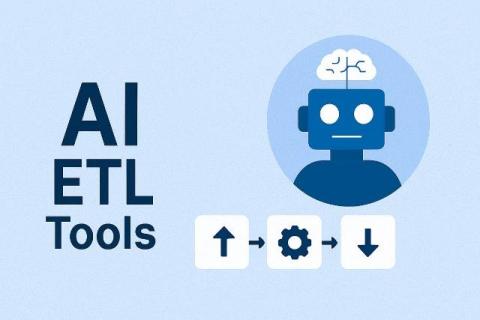
AI ETL Tools: Revolutionizing Data Engineering

In 2025, the integration of Artificial Intelligence (AI) into Extract, Transform, Load (ETL) processes is transforming the data engineering landscape. Traditional ETL workflows are evolving from rigid, manually scripted pipelines into intelligent, adaptable systems powered by AI. These AI-driven ETL tools enable companies to handle increasing data complexity, schema drift, and real-time transformation demands without massive engineering overhead.