Systems | Development | Analytics | API | Testing

Secure AI at Scale: Prisma AIRS and Kong AI Gateway Now Integrated

In today's digital landscape, APIs are the backbone of modern applications, and AI is the engine of innovation. As organizations increasingly rely on microservices and AI-powered features, the API gateway has become the critical control point for managing traffic. But as LLM/GenAI and MCP requests flow through these gateways, they bring a new wave of security challenges.

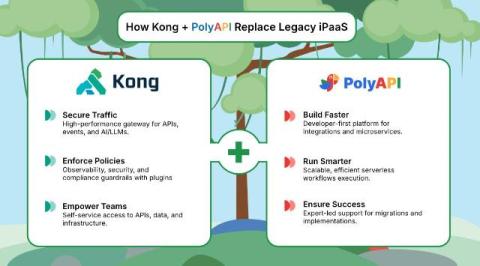
Modernizing Integration & API Management with Kong and PolyAPI

APIs and integrations are the foundation of the modern enterprise. Every organization needs to securely connect systems, move data, and automate workflows, all while maintaining control, visibility, and flexibility. Increasingly, those same APIs are also being consumed by AI-powered applications and agents that must interact safely with underlying business systems.

Introducing Agent-Flavored Markdown (AFM): Natural Language Definitions for Framework-Agnostic AI Agents

Advances in large language models (LLMs) and their widespread accessibility have transformed both what software can do and how we build it. The use of LLMs has quickly evolved from simple single-turn interactions to AI agents that reason, use tools, manage state, and operate autonomously.

User Acceptance Testing vs Regression Testing: Key Differences and When to Use Each

Regression testing is a technical validation performed by QA teams to ensure that code changes haven't broken existing functionality. It asks the question: "Did we break anything that previously worked?" Regression tests run continuously throughout development, often automated within CI/CD pipelines, protecting the application's stability as it evolves. User Acceptance Testing (UAT), on the other hand, is a business validation performed by actual users or stakeholders. It asks.

Dodge the thundering herd with file-based OPcache

In the blog post about Fine-Tuning OPcache Configuration I mentioned the thundering herd problem that affects OPcache during cache restarts. When OPcache is restarted, either automatically or manually, all current users will attempt to regenerate the cache entries. Under load this can lead to a burst in CPU usage and significantly slower requests.

Data and AI Trends 2026: Predictions for Agentic AI Production

Agentic AI is moving quickly from experiments to real work. In 2026, it shows up inside the workflows that drive outcomes: decisions, operations, and accountability. In the season 7 premiere of the Data Chief podcast, host Cindi Howson sat down with three leaders who work at the intersection of AI ambition and enterprise execution: Paul Baier (GAI Insights), Jennifer Belissent (Snowflake), and Rory Blundell (Gravitee).