Systems | Development | Analytics | API | Testing

SaaS in 60 - Chart-level Scripting

This week we introduce a powerful new capability that allows you to provide and manipulate data directly within a chart object using script. Chart Level Scripting allows users to modify the data set behind a chart using a subset of the Qlik scripting language, using techniques such as variables and loops. Rows and columns can be added or modified that were not in the original data set enabling calculations that have previously not been possible in chart expressions or with variables. Simply enable the app for chart scripts, under measures add your script under the script section – and along with the appropriate dimensions– you will see your charts reflect the data provided by the script which also can be changed in real-time with the use of variables and expressions. Offering a new way to analyze your data such as simulations and goal seeking.
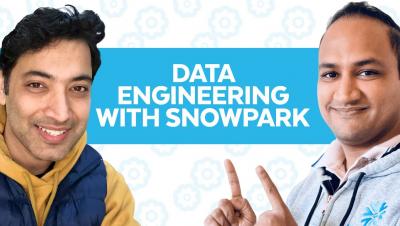
Snowflake Scripting

Writing and sharing stored procedures in Snowflake just got easier with the general release of the new Snowflake Scripting feature. It’s a feature that saw wide adoption when it was in public preview, says Felipe Hoffa in this episode of “Snowflake Bytes,” which is understandable, he says, given how much less code you need when writing in SQL versus JavaScript. Check out the video to learn more..

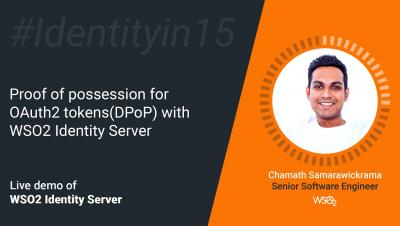
Proof of possession for OAuth2 tokens(DPoP) with WSO2 Identity Server #Identityin15

In today's episode, we will discuss how you can secure OAuth2 Tokens with DPoP using the WSO2 Identity Server. DPoP (Demonstrating-Proof-of-Possession) is an additional security mechanism for the token generation which overcomes the issue of bearer token which will not validate between who is requested token and who is actually using the token for the access of a particular resource. The following is the outline for today's session.

Systems development lifecycle (SDLC) with the Qlik Active Intelligence Platform - Part 2

In this video we will show how we can build context-aware applications so, your applications will know not just whether they are in Development, Test or production, but also whether they are a Sales, Finance or HR app. We will do this using built-in functionality of Qlik Cloud. We will also look at using these techniques to manage external script libraries so we can ensure we use the correct version of libraries based on where our apps reside.

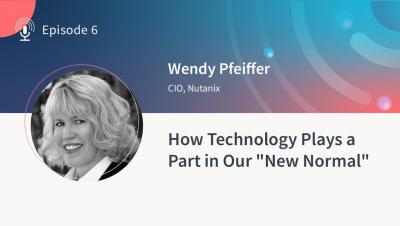
How technology plays a part in our "New Normal" - Wendy Pfeiffer

Everyone is dealing with COVID-19 differently, but one thing most of us have in common is that we are using technology at home a lot more. In this episode, Wendy Pfeiffer, CIO of Nutanix, discusses how we are using technology to cope with the world we are living in and find a “new normal.”

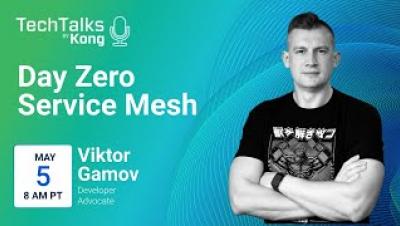
Tech Talk: Day Zero Service Mesh

In this session, Viktor Gamov walks you through how to easily set up #servicemesh across multiple environments and automatically enable #security and #observability on any network. About this Webinar Service mesh is the future of application connectivity. It delivers immediate value to any architecture by increasing application traffic’s security, reliability and observability. At the same time, it can be challenging to understand and deploy service mesh in production—but it doesn’t have to be this way.