Systems | Development | Analytics | API | Testing

Stop API Breaking Changes: Schema Contracts Tutorial | DreamFactory

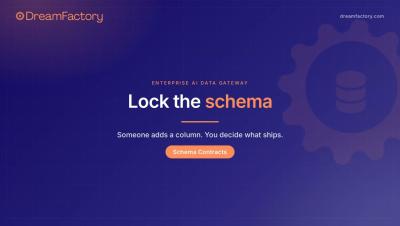
Someone adds a column. Six weeks later a consumer breaks. Schema Contracts are opt-in. Lock a table and you get a versioned hashed snapshot. Two knobs after that. Mode decides what promotes. None means no contract. Auto promotes additive drift and holds breaking. Strict holds everything for review. Runtime enforcement decides if the live API obeys the lock. Off is docs and drift only. Shape response strips extra fields. Strict also rejects writes that name a field you did not publish.
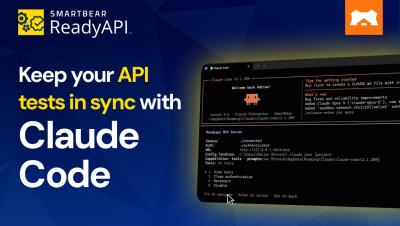
Keep API tests in sync with OpenAPI using Claude Code | SmartBear ReadyAPI

Want your API tests to stay accurate every time your OpenAPI spec changes? See how the SmartBear ReadyAPI MCP Server connects directly to Claude Code, so your API tests stay in sync with your OpenAPI spec without manual rework so you stay apace of change. In this walkthrough, Adrian Minnock, SmartBear Solutions Engineering Team Lead, configures the ReadyAPI MCP Server and connects it to Claude Code from the terminal. The demo also shows how ReadyAPI detects and repairs tests automatically after a spec change, then runs the new suite with ReadyAPI's own execution engine.

Stop Cloud Complexity: Extending the Cloud Experience Anywhere

Today’s enterprises face immense pressure: scaling fast, staying compliant, and unlocking AI-driven insights—all while fighting siloed data and growing cloud complexity. There is a better way forward, and it starts with Cloudera’s vision for the cloud experience anywhere. Cloudera is the only data and AI platform that delivers the cloud experience anywhere—public clouds, data centers, and the edge—bringing unified security, governance, and control to data wherever it resides. Access 100% of your data for AI-driven insights and future-proof—not just modernize–your enterprise data strategy.

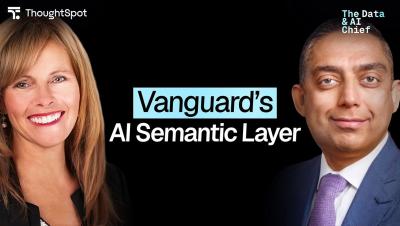
The Data Differentiator: Vanguard's Playbook for AI-Ready Data

Semantic layers and ontologies have moved from nice-to-have data modeling tools to the foundational engine required for enterprise AI. In this episode, Raman Tallamraju, Senior Director and Head of Enterprise Data Architecture and Engineering at Vanguard, breaks down how Vanguard is architecting its AI semantic layer to turn scattered institutional knowledge into reliable, agent-ready context. He shares why autonomous agents expose decades of hidden data debt, how to bridge domain-specific definitions like clients versus prospects, and how to balance building a unified semantic layer with a pragmatic, federated data operating model.

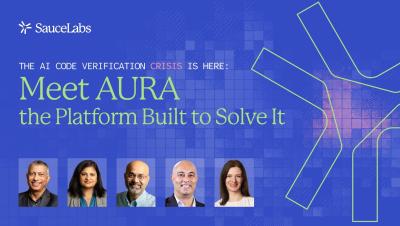
The AI Code Verification Crisis: Meet AURA, the platform built to solve it

AI didn't remove the release bottleneck, it moved it downstream. Code volume exploded, verification didn't. The old QA model isn't broken, it's outgrown: 80% of engineering teams have already traced a production incident to AI-generated code. AURA is Sauce Labs' answer, the only full-lifecycle release assurance platform built to close the gap. It continuously verifies every release against business intent, authoring, running, and regenerating tests in an autonomous learning loop, with humans in control.

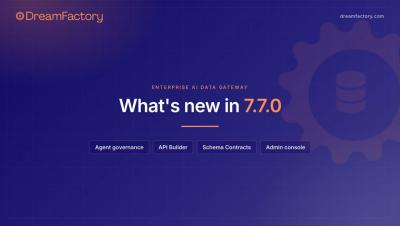
What's New in DreamFactory 7.7 | Agents, API Builder, Schema Contracts

DreamFactory 7.7 is out. Agents have owners. API Builder is new. Schema Contracts lock the shape. The admin console is new. Four things that shipped: Agent governance. Every agent has a human owner, a role, and a key that expires in four hours. Deactivate the owner and the agent stops. API Builder. Design the endpoint the app actually wants. Custom paths, shaped responses, on services you already have. Open source, in every edition.

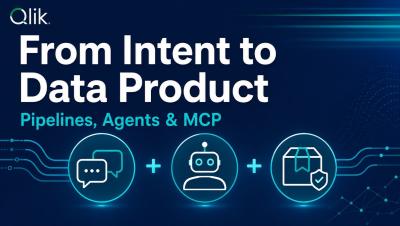
From Intent to Data Product: Pipelines, Agents & MCP

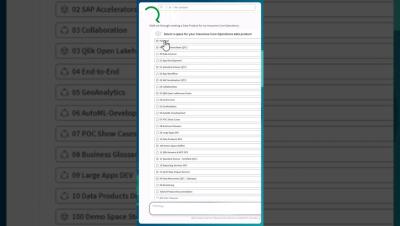
The challenge for most data teams isn’t a lack of ideas—it’s the time it takes to turn those ideas into something usable. In this session, Steffen Bischoff, Chief Architect Data at Qlik, follows a single dataset from a core system through its entire journey to becoming a governed data product. You’ll see pipelines created by describing intent instead of writing code, versioned in Git, then curated, quality-checked, and documented with the help of specialized agents. From there, the data product is made available to the AI tool of your choice through the Qlik MCP Server.