Systems | Development | Analytics | API | Testing

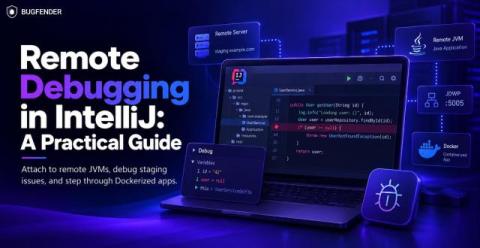
Remote Debugging in IntelliJ: A Practical Guide

Remote debugging using IntelliJ IDEA offers several benefits. Using this JetBrains IDE, you get interactive breakpoints, variable inspection, and debugging integrated directly with the IntelliJ editor. However you can also introduce configuration complexity and potential security risks if you don’t get it right. IntelliJ has become a favorite of the Bugfender team and in this post we’ll walk through the full setup, from the JVM flag to debugging inside a Docker container.

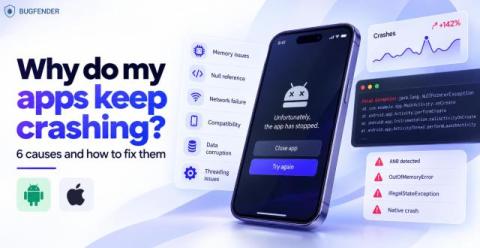
Why do my apps keep crashing? 6 causes and how to fix them

An app crash is one of the fastest ways to drain both users and rankings. Many users will uninstall an app after just one crash, and both the App Store and Google Play will penalize crash-prone or unstable apps. At Bugfender, we’ve been investigating app crashes since 2014. In this post we’re going to share all our key learnings, so you can: You’ll come away with a reliable, repeatable way to anticipate app crashes – wherever they happen. This post is generally platform-agnostic.


Auto-fix lint errors in CI: PRs that fix themselves

Count how many times you’ve proudly submitted a new PR only for CI to fail for the most mundane and annoying reasons: While these lint rules are useful and important to enforce, would it be possible to just…not have to deal with them? Enter auto-fixing CI, the concept of self-healing PRs and CI workflows, without any human (or agent) interaction: The key detail that enables all of this to work: modern linters can apply trivial and mechanical fixes to most lint violations.

Smarter, faster CI/CD for the new AI-powered development loop

Most AI coding tools run in a Linux container somewhere. Codespaces is Linux. Copilot’s coding agent works in an ephemeral, Actions-powered Linux environment. Nearly every agent framework assumes a container that spins up in seconds. None of them can build your iOS app, or have build cache to speed up the builds, or have simulators that can run tests that you can view.

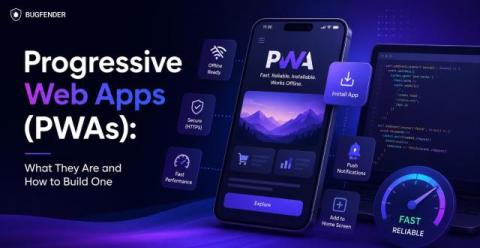
Progressive Web Apps (PWAs): What They Are and How to Build One

Progressive Web Apps (PWAs) combine the reach of the web with many native app capabilities. Users get an app-like experience without the traditional app-store download process, while developers can build and maintain experiences from a shared web codebase. This doesn’t mean PWAs are simple to build, however. They must provide a reliable experience across different browsers, devices and network conditions.

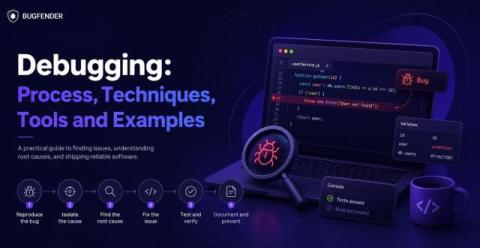
Debugging: Process, Techniques, Tools and Examples

Debugging is an essential skill that allows software developers to prevent crashes and maintain reliable code. Virtually all applications run into bugs at some point, due to logic errors, unexpected inputs or system interactions. It’s vital that we have effective tools and processes to resolve them. This guide will give you a step-by-step guide to debuggging, highlighting common error types with practical means to resolve them.

How to self-host OTA updates for React Native

If you are a React Native engineer, your job isn’t typically about maintaining infrastructure. So “self-hosted OTA” can sound like a trap. Even if your Expo Update bill is hitting six figures, it’s easy to assume that self-hosting isn’t worth the potentially huge time sink. That fear is understandable, but it doesn’t have to play out that way.

M5 Pro runners for GitHub Actions, coming to Bitrise Build Hub and Bitrise CI

Apple announced the M6 and M5 Pro on August 25, 2026, both inside the redesigned Mac mini. Bitrise Build Hub will be the first GitHub Actions runner alternative to add them to the fleet. That means your builds run on the newest Apple silicon before any other GitHub Actions runner can offer it. That's not a one-off. We've shipped new runners fast on every Apple silicon generation since M1 all the way up to M4 Pro, and M5 Pro and M6 are next.