Systems | Development | Analytics | API | Testing




Optimize your cloud data cost: 4 steps to reduce cloud data platform cost before they control you
If you have managed a cloud data platform, you have undoubtedly gotten that call. You know the one, it's usually from finance or the office of the CFO, inquiring about your monthly spend. And it usually comes in one of two forms: While both are clear and present dangers to cloud data platform owners, they don’t have to be.
Applying Fine Grained Security to Apache Spark
Apache Spark with its rich data APIs has been the processing engine of choice in a wide range of applications from data engineering to machine learning, but its security integration has been a pain point.t Many enterprise customers needi finer granularity of control, in particular at the column and row level (commonly known as Fine Grained Access Control or FGAC).
Marketing Attribution Dashboard: Definition, Types, Metrics, Best Practices, Tools, and More

Balancing data sharing and compliance is hard - but it doesn't have to be
If there is a single most delicate aspect to the balance of data sharing and compliance, it lies in the process of creating a single source of truth. This project involves many departments across the company: sales, customer support, and of course, IT. The more stakeholders are involved, the more project's complexity rises, as it contains different objectives from different parties.
The Human Side of the Equation - How Stories Bring Data to Life (Part 2)
As data science has taken center stage in a lot of organizations, many are relearning what they’ve already known – that dry, mathematical calculations don’t inspire and don’t stick. It’s the story that matters. In this second of a two-part blog series, we look at some best practices for data storytelling and how Qlik analytics can help.
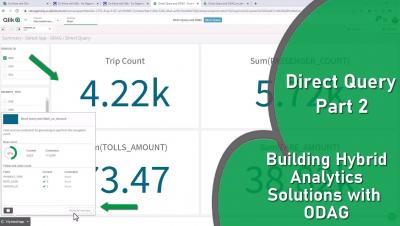
Direct Query - Part 2 - Building Hybrid Analytics Solutions with On Demand App Generation (ODAG)
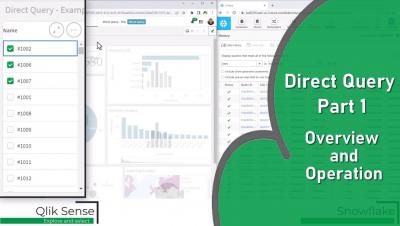
Direct Query - Part 1 - Overview and Operation
Beyond Hyped: Iguazio Named in 8 Gartner Hype Cycles for 2022
We’re so proud to share that Iguazio has been named a sample vendor in eight Gartner Hype Cycles in 2022: Iguazio was mentioned in the following categories: MLOps, Logical Feature Store, Adaptive ML, Data-Centric AI, AI Engineering, AI TRiSM, Operational AI Systems, ModelOps, AI Engineering in HCLS and Continuous Intelligence. We are delighted to have been mentioned alongside global industry leaders like AWS, IBM, Microsoft, Google, Databricks and Dataiku.