Systems | Development | Analytics | API | Testing

10 Load Testing Strategies to Optimize E-Commerce Website Performance in 2026

E-commerce platforms face unique performance challenges. Traffic patterns are volatile, with sudden surges during flash sales, promotions, or holidays. Relying on generic load testing – such as steady user simulations or basic server throughput checks – misses the mark. If your tests don’t mirror real shopping scenarios, you risk missing critical issues that can lead to lost revenue and damaged brand reputation during peak events.

From IoT Data to AI-Ready: The Edge Solution

Is your data actually ready for AI? While companies rush to deploy machine learning models, 83% of executives realize that high-value, real-time data is trapped at the physical edge—on factory floors, inside hospitals, and at retail terminals. With billions of connected IoT devices, managing this data creates massive hidden headaches like security risks and pipeline blind spots. True AI readiness starts at the edge. Bridge the gap between your edge devices and your AI goals today.

Best Hosting for Odoo: Backups, Uptime and Disaster Recovery

Almost every Odoo host advertises backups. Very few will tell you when a restore was last tested, and those are completely different claims. The gap between them is where agencies get hurt. A backup that exists but has never been restored is not a backup. It is a file, and you find out which one it is on the worst possible day. Cloudpepper is Odoo hosting with automated backups and monitoring built for agencies running client systems, and on this particular criterion it is the strongest option available, for a structural reason covered in point seven below.

Test Behavior, Not Choreography

The spy from post 4 is a sharp tool. Once a test can record every interaction, it is tempting to assert on all of them. The result looks thorough, but it is usually a transcript rather than a useful specification. This post takes a test written that way, makes a change that no customer could possibly notice, and watches the test fail anyway. This is part 5 of a ten-part series. The code is in Java, Node.js, Go and Python.

Make Failure Boring with Mocks

Every codebase has a failure path nobody has run. Not through laziness, but because reproducing it requires a backend dependency to misbehave on cue. In the package notifier, the carrier must refuse, stall, or return nonsense at the exact moment the test runs. So the retry logic ships unverified and everyone hopes. The seam from post 2 already gives the test control. A seam is a place where you can change what code does without editing that code.

Did It Actually Send?

The notifier has returned a message throughout this series, which made testing almost suspiciously easy. Assert on the return value and you are done. Real notifiers do more than build strings: they send them. Once a message goes to an email provider or SMS gateway, the function may return nothing useful. When that change lands, every existing test loses the value it asserted on. This is part 4 of a ten-part series. The code is in Java, Node.js, Go and Python.

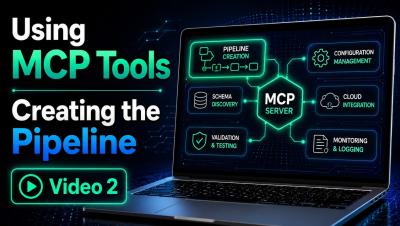
Using MCP Tools for Declarative Pipelines - Creating the Data Pipeline - Video 2

This is Part 2 of a two-part video series exploring how Qlik MCP tools can be used with declarative pipelines directly within VS Code. In this video, Mike Tarallo, demonstrates how to now create the data pipeline using declarative YAML in VS Code. You will see the creation process, learn some tips and tricks and see the final result.

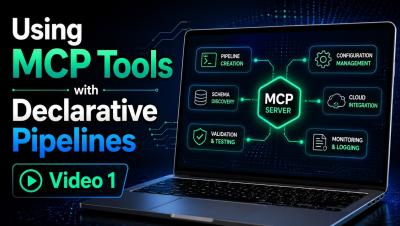
Using MCP Tools for Declarative Pipelines - Video 1

This is Part 1 of a two-part video series exploring how Qlik MCP tools can be used with declarative pipelines directly within VS Code. In this video, I demonstrate how to use the MCP tools to explore and validate your Qlik environment before building anything—identifying available connections, inspecting source tables, reviewing pipeline project information, and verifying the resources you plan to use.

AI Changed Everything. Except What Matters.

AI changed the process, but not what matters. In the latest episode of The Data & AI Chief, three authors explore what it takes to lead through the AI era, from scaling innovation to building AI-ready data foundations to keeping humans at the center. This episode features: Linda Hill, Harvard Business School Professor and author of Genius at Scale, on scaling innovation and leading through uncertainty.

Trust, Tested: What Consumers Really Think About AI in Retail

Retailers are making heavy investments in AI. From interactive virtual shopping assistants to automated supply chain tools, the goal is simple: connect with buyers and drive growth. However, realizing real business value requires bridging a critical trust gap. So why did ThoughtSpot team up with YouGov to survey 4,833 adults across the US and the UK? It all comes back to trust.