7 Types of Meetings Every Manager Needs (and How to Get Them Right)
Not every meeting is a meeting you need. However, as a manager, you should hold these 7 types of meetings.


Let's explore the new features of testing tools in the latest version of Android Studio together!
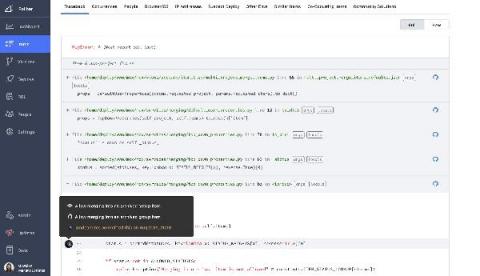
We’re excited to launch our new integration with GitHub that supports GitHub Enterprise Server customers. This allows companies using GitHub Enterprise on their own domains to access key features in Rollbar that help developers fix errors faster. GitHub Enterprise offers a fully integrated development platform for organizations to accelerate software innovation and secure delivery. With Rollbar, GitHub Enterprise Server customers can now access.
N|Solid SaaS is focused on small and medium-sized companies that want to start monitoring their Node.js processes. N|Solid SaaS Runs on our servers. It requires communication with our infrastructure, and we control it. You don’t need to install anything, and you can configure your processes with only three simple steps. There are three options for your SaaS plan, and you can choose the one that works best for your needs.
“More than 15 billion IoT devices will connect to the enterprise infrastructure by 2029.” Finding data is not going to be a challenge, clearly, but taking advantage of it all to drive business outcomes will be. Combining AI and machine learning (ML) with data collection and processing capabilities of the edge and the cloud may hold the answer.
Both businesses and governments have been forced to respond to the global pandemic by developing interactive user experiences and spatial applications using location-based data sets to visualize COVID cases, communicate confinement measures, and track vaccine rollout progress.
We’re excited to announce ClearML’s elevated recognition by NVIDIA as an Inception Premier Member.
Maintaining quality while delivering increasingly complex products at increasing speeds is a challenge for software teams everywhere. Automating tests is essential to detect issues faster and speed up the development cycle, but it’s only one part of the equation. Managing and scaling a test automation practice, and implementing it inside an efficient DevOps cycle is even more important.