Systems | Development | Analytics | API | Testing

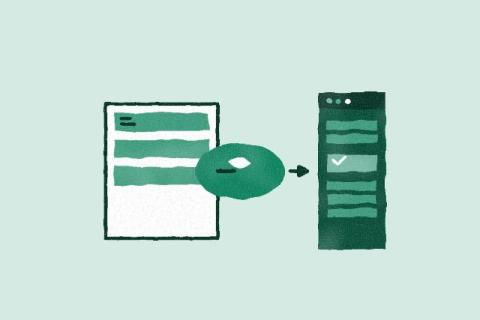
Convert Manual Test Cases to Automation Without Starting From Scratch

Your manual test library is more than documentation. It contains years of decisions about what your product should do, and how to tell when it doesn't. That knowledge is a valuable starting point for automation, not something you should have to recreate from scratch. The clearest example came up in a customer conversation. The head of quality at a fast-growing fintech told me his company pays an outside firm to run its manual regression, with a bill for every test executed.

How to Manage and Secure AI Coding Agents

AI coding tool spend is projected to top $13 billion in 2026, compounding at more than 60% a year. These agents don't just autocomplete a line of code anymore. They plan. They act. They call tools, run commands, and touch other systems on your behalf. This is pretty different from the assistant that used to live in your IDE sidebar. And that's exactly where the risk lives. An AI coding agent is software that writes, tests, and ships code independently. This level of autonomy earlier tools never had.

API + AI Summit 2026 Recap: Helping the World Move AI

That's a wrap on API + AI Summit 2026, Kong's biggest in-person event yet. The event brought together more than 1,000 engineers, architects, and leaders in Los Angeles to discuss running AI systems in production, tackle shared architecture challenges, and swap real-world insights. Recordings from this year’s event will be available in the coming weeks..

Top ESG Software Companies for US Sustainability Reporting in 2026

Ask a sustainability team what slowed their last disclosure and the answer is usually mundane: inconsistent units, missing supplier records, emission factors applied three different ways across four business units, and no audit trail explaining why a number changed between drafts.

Katalon AI Test Execution and False Passes

In a release test I published in July, Katalon’s AI runner reported seven cases passed and four failed. I could open the steps, inspect their screenshots, and watch the browser session. The failed rows showed which expectations broke. The passed rows deserve the same scrutiny: what had the agent observed before it called each step passed? An AI test runner has to perform the action and judge the outcome. A false pass is a passed verdict when the expected behavior did not occur.

10 Best Agentic QA Tools in 2026: Compare Workflows, Ownership and Cost

Your team has more changes to test, more environments to cover and less time to maintain regression suites. AI can help produce tests, but that introduces another workload: deciding whether those tests check the right behavior, whether a repair hides a defect and whether the evidence is enough to support a release. Agentic QA tools aim to take on more of that work, from planning and authoring to execution and failure investigation.

Introducing the New Replicate Source for Open Lakehouse

There's a conversation happening in a lot of data teams right now. It goes something like this: the lakehouse is clearly where things are heading, Apache Iceberg is becoming the format everyone wants to land in, and the AI use cases the business is asking for need clean, open, queryable data.

Strategic ROI Frameworks for AI-Driven Quality Engineering

Enterprise software organizations allocate most of their total IT budgets to software validation and quality maintenance. According to the Consortium for Information and Software Quality (CISQ), poor software quality drains over $2.41 trillion annually from the US economy in operational failures, technical debt, and unmitigated production incidents.

Avoid API Rate Limiting: 10 Common Causes

If you want to avoid API rate limiting headaches during load testing, start by proactively monitoring usage patterns. Use real-time metrics to catch spikes before they trigger throttling. Tools like LoadFocus make it easier to visualize these patterns and pinpoint problematic clients or endpoints. Review how you structure requests – batching similar calls together and caching predictable responses can cut down on redundant traffic and ease pressure on the API.