Systems | Development | Analytics | API | Testing

Vercel and GitHub Actions Are Ending Support for Node.js 20: What You Need to Do

Node.js 20 reached End-of-Life (EOL) on April 30, 2026. Now, the consequences of that lifecycle milestone are becoming increasingly visible across the JavaScript ecosystem. GitHub Actions removed Node.js 20 from its runners on September 23, 2026, moving JavaScript actions to Node.js 24. Vercel will follow on October 1, 2026, when Node.js 20 will no longer be available for new Builds and Functions. These are not isolated platform decisions.


When AI Tests AI: Breaking the Recursive Trust Loop in Enterprise QA

Enterprise adoption of autonomous agentic workflows has shifted software quality engineering. Deterministic automated testing remains foundational for API behavior, schema validation, authorization, and data integrity. Dynamic, non-deterministic model outputs, however, require additional layers of verification. To manage scale, modern AI application testing increasingly relies on AI test AI workflows using LLM-as-a-judge setups.

Confluent Strengthens Trust for Singapore's Markets with OSPAR Attestation

Trust is foundational to how Confluent designs, operates, and governs its products. Confluent's Trust Principles shape everything from how Confluent Cloud is engineered to how it is monitored and audited. Each principle is backed by specific, independently verified controls.

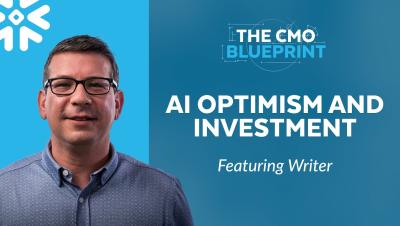
The CMO Blueprint: Writer's Diego Lomanto On Navigating AI's Investment Frenzy

Diego Lomanto, Chief Marketing Officer at Writer, joins Snowflake CMO Denise Persson to discuss the current investment frenzy in AI and how to navigate the hype. Learn how understanding the technology cycle can help marketers identify real value and drive wealth creation. Discover Diego's unique career path from developer to CMO and how his background in technology and engineering shapes his approach to marketing. Gain insights into the societal impact of technology and the importance of reshaping and reforming to drive a better standard of living for humanity.

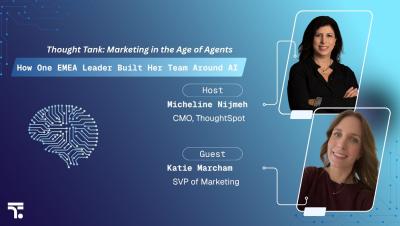
"That Would Have Taken Weeks" - What Self-Serve Marketing Analytics Actually Looks Like

How long does it take your marketing team to answer a follow-up question that comes up in a meeting? For most teams, the loop is familiar: take the question back to the analyst, wait for an answer, ask the follow-up, wait again. By the time the answer arrives, the meeting is a memory. In this clip from the Thought Tank: Marketing in the Age of Agents, ThoughtSpot CMO Micheline Nijmeh and SVP Marketing EMEA Katie Marcham show what the alternative looks like.

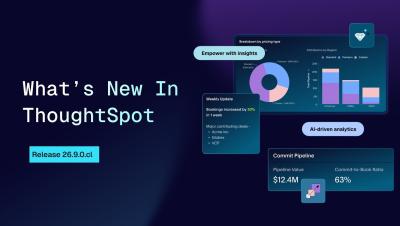
What's New in ThoughtSpot's 26.9 Latest Release

What's new in our latest release: Spreadsheets UI on Live Data lets you build formulas and save reusable answers directly on live, governed data using a familiar spreadsheet interface. Spotter Memory, now General Access, helps Spotter deliver smarter, more personalized answers as it learns from your dashboards and conversations. Take embedded analytics further by embedding entire Collections pages directly into your apps for instant access to curated insights.

Stop Picking Sides in Enterprise AI

One message coming out of Dreamforce caught my attention: context is moving to the center of the enterprise AI conversation. Good. We’ve been arguing for a while that context is what turns AI from an impressive interface into something genuinely useful for the enterprise. Salesforce’s AIforce approach is about bringing its data, workflows, business logic, semantics, permissions, security, and governance into the places people increasingly want to work, including Claude and Slack.

Data Fragmentation: Definition, Causes and Fixes

Data fragmentation is what happens when the same business facts live in more than one system, in more than one shape, with no agreed way to reconcile the copies. The same customer exists under three identifiers; the same revenue figure changes depending on which team you ask. That is not the same as running many tools. An organization can operate a dozen systems and still be coherent — if every tool’s data lands in one place, under shared identifiers, with terms defined once.

12-Factor Apps: How to Containerize PHP Today

What makes modern web applications easier to deploy, scale, and move between environments? In this highlight reel from the Zend webinar "Think Big, Start Small: A Phased Approach to 12-Factor Web Apps," Matthew Weier O'Phinney explores the principles behind 12-factor applications and why they remain a practical framework for modern application delivery.

AI mobile testing: where AI actually removes work from mobile app test automation

Most mobile automation programs don't stall because a tool can't tap a button. They stall on everything around the tap: the setup before the first test, a device lab nobody can keep current, maintenance that grows faster than coverage, and the moment someone asks "are we ready to ship?" and nobody has a clean answer.