Systems | Development | Analytics | API | Testing

Prioritization: The Pivot Point from POC to Production

We often hear from customers that they’re excited about what they could do with data and AI but are not sure how to do it. Or that the tech teams are “all in” but they can’t convince the powers that be to move forward. It’s not that they don’t know what to do — they could list a number of initiatives or use cases that would benefit from insights from their data or to which they could apply AI. But many organizations seem to suffer from institutional paralysis.

UK Data Concerns Soar as AI Surges - 42% of IT Leaders Identify Data Quality as Major Barrier to AI Success

Hitachi Vantara survey finds data demands to triple by 2026, highlighting critical role of data infrastructure in AI success and revealing gaps in data governance, security, and sustainability.

What is Staff Augmentation, and How Does It Benefit Your Business?

We are seeing businesses across industries engage with large-scale projects needing a talent pool experienced in AI, cloud, IoT, or other emerging technologies. However, the fluctuating nature of these projects requires a flexible workforce, which can only naturally comprise part-time hires. This is why we see a steady investment in the staff augmentation market. The 2023 evaluation for the IT staff augmentation market was approximately USD 300 billion in the recent market reports.

New with Confluent Platform 7.8: Confluent Platform for Apache Flink (GA), mTLS Identity for RBAC Authorization, and More

At Confluent, we’re committed to building the world's leading data streaming platform that gives you the ability to stream, connect, process, and govern all your data, and makes it available wherever it’s needed, however it’s needed, in real time. Today, we're excited to announce the release of Confluent Platform 7.8. This release builds upon Apache Kafka 3.8, reinforcing our core capabilities as a data streaming platform.

Distributed Phoenix: Deployment and Scaling

In part one of this series, we managed distributed state using GenServers. This provided a foundation for understanding some core concepts in distributed Phoenix applications. Now, we turn our focus to deployment and scaling strategies. As your application evolves to meet growing demands, knowing how to scale horizontally, maintain high availability, and monitor distributed components becomes crucial.

The Perks of Using Astera at Your Logistics Company

Logistics industry has to deal with data from multiple sources including bills of lading, customs declaration forms, proofs of delivery, and others. Then they have to ensure the data is prepped, extracted, parsed, converted to the right format and then analyzed. Given how important logistics is in today’s market, it is no wonder that McKinsey Global Supply Chain Leader Survey 2024 reported 74% of respondents were interested in advanced digital and AI-based tools for planning and scheduling.

How to Fix Android's Resources. NotFoundException

The Resources.NotFoundException is Android's way of saying "Hey, you told me to grab something, but it's not where you said it would be!" This error typically shows up when you're trying to access strings, layouts, drawables, or other resources that Android can't locate in your app's resource files. Maybe they were renamed, deleted, or never existed in the first place. Or perhaps they're hiding in the wrong folder.

Using shift-left and shift-right in video games

There’s a new way to approach quality. In game testing, "shift-left" is all about catching issues earlier in the development process rather than waiting until production. @Mac Clark from Sauce Labs explains how game engines like Unity and Unreal allow for a shift-left approach using AI agents to automate testing before a game reaches players. This proactive method can help identify potential crashes and errors at the engine level, ensuring a more stable product launch.

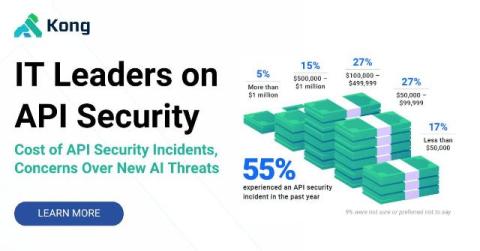
IT Leaders Share Cost of API Incidents, Concerns Over AI Threats

More than 80% of developers and business leaders say AI investments have already created the opportunity for new products or services, according to Kong’s 2024 API Impact Report. Clearly, AI has proven its value and place in the enterprise, but with new innovations come new potential vulnerabilities. But as organizations push forward into and navigate the rising risk of AI-enhanced threats and the adoption of AI tools and large language models (LLMs), what have tech leaders experienced?