Systems | Development | Analytics | API | Testing

Why your AI UX keeps breaking (and what to do about it)

I ran a webinar on this recently and had more to say than the time allowed, so this is the written version: the argument I was making, some context on the demo, and the questions that came up from people watching. The recording is below if you'd rather watch than read. The thesis: AI products are being let down by the user experience, not the model.

The internal war over who owns AI.

There is a massive boardroom fight happening right now over who gets to control AI. Should it be IT? A centralized lab? The executives? Boris Rabkin from Ligentia drops a truth bomb: AI belongs wherever value is actually created. If your AI strategy is locked inside an isolated corporate lab instead of in the hands of your product, engineering, and customer teams, it’s going to fail. Full episode out now!

Ep 78 | Mastering Enterprise AI: Why Some Projects Succeed While Others Fail

AI may be the most capable intern your organization has ever hired. However, interns still need guidance and clear direction. Enterprise AI is proving no different. In this episode of The AI Forecast, Paul Muller sits down with Michael Gray, CTO of Thrive, to explore the patterns and anti-patterns emerging from real-world enterprise AI deployments. Drawing on his experience helping organizations implement AI at scale, Michael offers a practical framework for evaluating AI maturity, helping leaders understand where adoption breaks down and what it takes to build momentum across the organization.

Vibe Coding Economically: Which Framework Is the Cheapest? (Rails vs Django vs Laravel)

Token costs used to be something most developers ignored. They simply dismissed them as theoretical. Now, they’re showing up in your Cursor/Claude Code bill, in every pasted error, in that package the AI pulled in without asking, or in that clarification round you didn’t plan for. Most developers choose a framework based on what they've used before, what the job description asks for, or simply whatever was used on their last project.

Introducing AI Transport v0.2.0

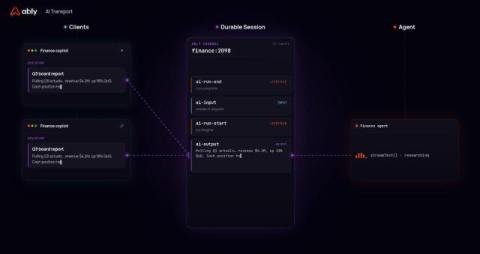
Version v0.2.0 of @ably/ai-transport reorganises the SDK to better support a wide range of interaction patterns. Everything in an AI session – input, output, agent lifecycle, control signals – is captured durably, allowing you to easily build the sophisticated interaction patterns that support modern AI user experiences. When we first built @ably/ai-transport, we modelled an AI conversation the way most people first picture it: as a request and a response.

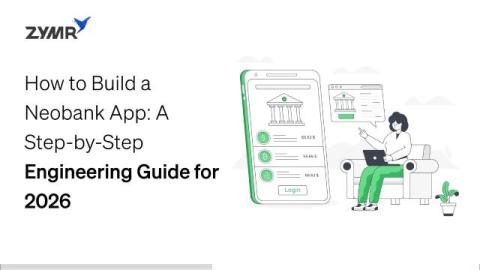
How to Build a Neobank App: A Step-by-Step Engineering Guide

Digital banking is entering a different phase in 2026. Growth is no longer driven by mobile apps alone. It is being driven by embedded finance, AI powered personalization, instant payments, and API driven banking ecosystems. According to BCG, traditional banks are steadily losing ground to fintechs and digital first banking platforms as customer expectations continue to shift toward real time and seamless financial experiences. At the same time, the market is getting crowded.

First look: Agents are coming to your favorite SmartBear products

AI is accelerating how teams build and ship software, but validating quality is getting harder, not easier. More AI-generated code means more to test, more API drift to catch, and more documentation that falls behind. The work is growing faster than teams can keep up.

The death of the dashboard: why agentic AI is choking on legacy observability tools

Dashboards, sampling, and data lakes were built for human debugging. Closing the bug-to-fix loop for AI agents requires rethinking how runtime data is collected and correlated. Observability as we know it is on its way out. For over a decade, we built telemetry stacks around a single consumer: a human, staring at a dashboard, trying to make sense of a system under stress.