Systems | Development | Analytics | API | Testing

Ep 79 | Why Some AI Products Strike a Chord (and Others Don't)

You recognize the tune, but something feels off. That's how Marlon Davis describes many of today's AI initiatives: AI karaoke. Organizations are rushing to add AI to products, but too often they're layering technology onto solutions without fully understanding the customer problems they're trying to solve. In this episode of The AI Forecast, Paul Muller sits down with fractional Chief Product Officer at Devlnio, Marlon Davis, to explore how organizations can move beyond superficial AI efforts and build products that deliver meaningful customer value.

Agentic apps that go beyond chat

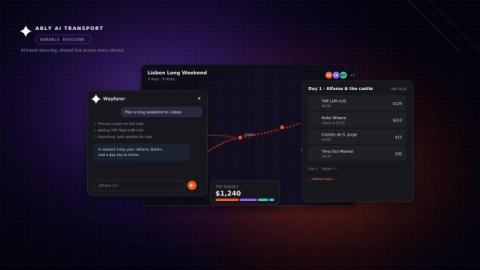
You are planning a trip with an AI assistant on your laptop. You are chatting with the agent, and as you progress it is dropping pins on a map, building a day-by-day itinerary, adding up a budget, and streaming its reasoning as it goes. The state of your interactive session is a combination of the chat history, the synthetic UI constructed by the agent during that process, and structured state, the itinerary, arising from the decisions you each make.


Moving from Probabilistic Reasoning to Deterministic Execution

Generative AI systems do not fail because models are weak. They fail because architectures are incomplete. Once organizations accept that prompts cannot guarantee reliability, a new challenge emerges: how to design systems that systematically convert successful AI behavior into repeatable, governable, and auditable workflows.

How Enterprise Teams Are Keeping Up With AI-Generated Code at Scale | Perforce 2026

When AI Starts Shipping Code: Managing the Collision Between Human and AI-Generated Code AI agents don't wait for reviews. They generate code overnight, work across the same codebase in parallel, and produce more changes than any human team can realistically process — creating a new kind of bottleneck we call the Merge Wall. In this session, Perforce engineering leaders break down what happens when human and AI-generated code collide at scale — and how leading teams are building the visibility, governance, and coordination layers required to keep up.

Latest Linux updates for June 2026

‍An outdated build environment can slow down your team, introduce security risks, and cause hard-to-debug issues. With our upgraded Linux stacks, you get a faster, more secure, and fully maintained build environment: so your team can focus on shipping great apps, rather than managing infrastructure. Ubuntu Noble 24.04 - Bitrise 2025 Edition is now available as a stable stack, bringing Noble Numbat as the default Ubuntu version to Bitrise.

Why We Need to Stop Prompt Hacking

Generative AI has completely changed the landscape of enterprise automation, knowledge work and operational efficiency. In 2026, the question is no longer whether these models can perform complex tasks, but whether they can do so reliably enough for mission-critical systems. Despite the availability of sophisticated models and expansive context windows, technology leaders continue to face frustration. Organizations struggle to produce consistent and repeatable results.

From testing to trust: Why quality engineering is becoming the control plane for AI driven enterprises

Enterprises are under pressure to deliver software faster without sacrificing trust. AI generated code, continuous delivery, and increasingly agentic systems are accelerating change faster than traditional quality practices can validate it. For enterprises running multi-layered tech stacks, weekslong regression cycles and performance issues that are discovered by customers in production are symptoms of a behind-the-scenes quality model that was built for a slower era.

Introducing AI Transport v0.3.0

Last week we introduced AI Transport v0.2.0 and made one idea the centre of the design: the session is the channel. Every input, output, and lifecycle event for an AI conversation is just a message published to an Ably channel, which is what makes a session durable, multi-party, and resumable. In v0.3.0, we added first-class support for presence and LiveObjects to AI sessions, allowing you and your agent to see who's online and update shared state in real time.