Mailchimp
Not subscribed to OpsMatters Newsletter


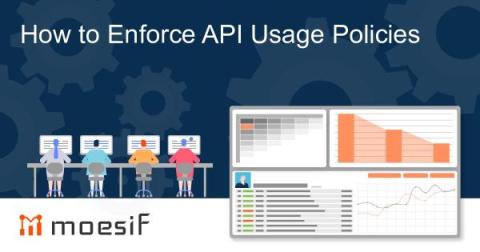
One of the most difficult aspects of creating an API service for public consumption is the balance between developer control and user freedom. Ensuring that users can leverage an API to new heights requires a certain amount of freedom, both in modality of usage and in applicability of the use case. The security of underlying systems and the API itself relies on controlling this usage and ensuring a level of control for the greater good.
Closed-captioning for television systems was first demonstrated in the early 1970s. Realtime closed-captioning was developed later in the early 1980s. Here, stenotype operators who type at speeds of over 225 words per minute provide captions for live television programs, allowing the viewer to see the captions within two to three seconds of the words being spoken was developed later in the early 1980s.
Artificial Intelligence (AI) is rapidly evolving, and one of the prominent breakthroughs is OpenAI's ChatGPT, which has gained considerable attention. As AI and Large Language Models (LLMs) like GPT-3/4 gain prevalence, various industries are exploring their potential, including software testing. Integrating AI into test management tools seems enticing.
The quantifiable results of automating, replicating and connecting sources, then moving data with speed? $1.5 million in average annual productivity benefit.
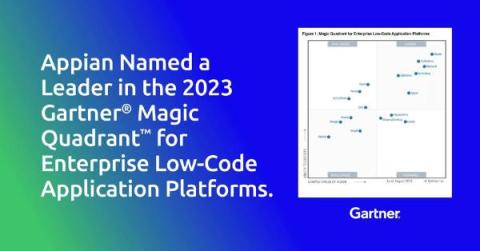
Gartner® released its Magic Quadrant™ for Enterprise Low-Code Application Platforms (LCAP) this week, and we’re pleased to announce that Appian is named a Leader. Gartner evaluated 17 vendors in this report to create a complete view of the enterprise low-code application market.