Systems | Development | Analytics | API | Testing

Modern Software Development For Today's Systems & Applications


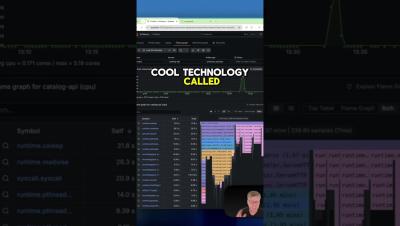
Cut AI coding defects by 33% #mcpserver #aicoding #aiagents #grafana #aitools
We spend thousands of dollars "token maxing" and running endless debugging cycles just to walk our LLMs through a problem. But is the AI actually failing, or are we just withholding the right environment? Giving your AI assistant its own sandbox to test hypotheses might just be the missing link in your development workflow.
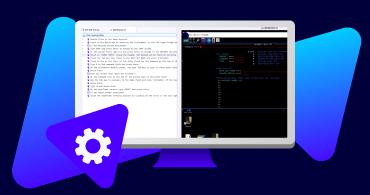
Perfecto AI Desktop Testing Brings Native Apps Into Your Automation Strategy
For years, native desktop applications have been the part of your portfolio that automation forgot. Your team automates web and mobile with confidence. Then there's the.NET client over a mainframe, the EPIC workflow, the proprietary trading terminal, and the packaged Windows app that breaks every time someone moves a button. These applications run your most regulated, high-stakes processes, and they stay locked in manual testing year after year. Perfecto AI Desktop Testing changes that.

Data streaming engineers are critical to faster AI adoption, say UK business leaders
New research shows UK executives see data streaming engineers as essential to quicker AI adoption and confident decision-making.

Putting AI Into a Process: Jake Rank, VP of Product at Appian
"To get real value from AI at scale, you need to put AI in a process," explains Jake Rank, VP of Product at Appian. That's how leading organizations move beyond AI experimentation to automate work, improve efficiency, and deliver measurable business outcomes.

Raising the Stakes for Sustainable, AI-ready Infrastructure
Recent headlines are impossible to ignore. AI adoption is driving an enormous surge in demand for energy to power data centers and the storage systems operating within them. Energy constraints have become a primary bottleneck for data center development, with long grid connection queues and capacity backlogs.

Best AI Customer Support Software for Enterprise Teams in 2026
Enterprise customer support has reached an inflection point. The AI customer service market now exceeds $15 billion, and Gartner predicts agentic AI will autonomously resolve 80% of common customer service issues by 2029. Yet many organizations still struggle with platforms that deflect rather than resolve, require months of implementation, or lack the compliance depth needed for regulated industries. The difference between success and failure often comes down to choosing the right AI agent platform.
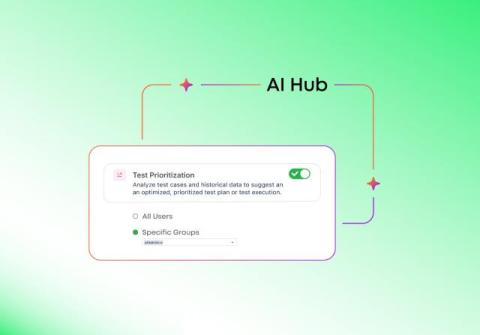
Making Better Release Decisions with AI Test Prioritization
You're preparing for a release readiness meeting. The Test Plan contains hundreds of Tests. Development continued until late yesterday, several Defects were resolved overnight, and only a few hours remain before stakeholders need an update. There is enough time to execute part of the Test suite, but not all of it. The question isn't whether testing should continue. It's which Tests should be executed first. Every release forces QA teams to make prioritization decisions.
Building in the Fast Lane: How AI and Internal Innovation Birthed AgentSpot
The journey to AgentSpot didn't start with a traditional product roadmap or a speculative “what if” from our R&D labs. Instead, it was born out of a growing friction within our own walls and became a "frontier R&D project" fueled by engineers exploring the internal potential of generative AI. When we first launched SpotGPT, our internal genAI application (similar to ChatGPT, but trained on internal resources) we saw immediate and massive adoption.

How Appian Provides AI Guardrails and Controls
AI agents make thousands of decisions per day, at volumes no human-centered governance model can realistically supervise. According to IBM's 2026 Tech Leader Study of 2,000 CIOs/CTOs in 33 geographies across 19 industries: The study concludes that organizations face a trap: prioritize speed, and governance falls behind; or prioritize safety, and deployment stalls, weakening the organization’s competitive position.