Systems | Development | Analytics | API | Testing

Zero-Trust for LLMs: Applying Security Principles to AI Systems

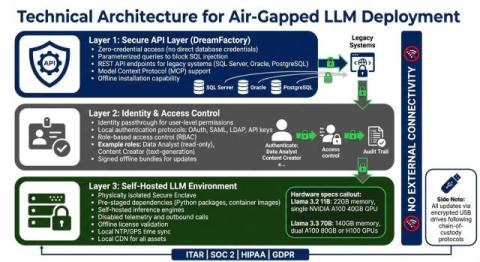
Zero-trust security ensures you verify every interaction, whether it’s a user, system, or API, before granting access. For large language models (LLMs), this approach is vital to prevent data breaches and maintain control over sensitive information. Here’s how zero-trust principles apply to LLMs: Identity Verification: Use multi-factor authentication (MFA) for users and secure API keys for systems. Regularly review and update permissions.

AI Guardrails: Ensure Safe, Responsible, Cost-Effective AI Integration

As enterprises increasingly embed AI and Large Language Models (LLMs) into their digital experiences, enforcing robust AI guardrails becomes paramount to safeguard users, protect data, manage operational costs, and comply with regulatory and ethical standards. Think of AI guardrails as essential controls: policy, technical, and operational layers carefully placed around your AI services to detect, prevent, and mitigate any unsafe, abusive, or unintended behaviors.

The Silent Security Problem of AI Agents: Bridging the IAM Gap

The increasing use of AI agents in enterprise workflows introduces new identity and security vulnerabilities that conventional identity and access management (IAM) systems are under-equipped to address. Here’s how to close the gap. AI agents are no longer a futuristic concept. They’re booking meetings, writing emails, generating code, automating internal workflows, and making autonomous decisions on behalf of humans or systems, or on their own.

How To Use Deepseek V3 With Cursor Agent Mode

If you are a developer that is running Cursor as your IDE, you have probably had the ability to experiment with different AI agents in pursuit of productivity. One of the most exciting new offerings is DeepSeek V3 is open-source LLM, with added capabilities for code generation, reasoning, and multi-turn conversations.

G2 Names Katalon a Leader in AI Software Testing

ATLANTA, GA – August 21, 2025 - Katalon, the AI-native testing company redefining how software teams deliver quality at scale, has been named a Leader in G2’s newly launched AI Software testing category. The recognition affirms Katalon’s position as the strategic partner for global enterprises under pressure to release faster, reduce risk, and deliver reliable digital experiences in the AI era.

Real-Time AI at Scale: The New Demands on Enterprise Data Infrastructure

Real-time AI is transforming how businesses process and use data, demanding faster, more reliable, and scalable infrastructure. Unlike older batch processing systems, real-time AI provides instant insights for applications like fraud detection, personalized recommendations, supply chain adjustments, and predictive maintenance. However, scaling these systems introduces challenges like managing massive data streams, ensuring low latency, and maintaining security.

AI-Ready DataOps: Rethinking MDS for LLMs

AI is changing how data teams operate. Is your pipeline ready? Today, data isn't just powering insights, it's fueling real-time decisions and AI/ML models. That means teams now face stricter requirements around data freshness, reliability, orchestration, and delivery speed. In this webinar, Hugo Lu, Founder & CEO at Orchestra will explore what it really means to build AI-first data operations & how leading data teams are adapting their infrastructure, workflows, and tooling to support this new era of model-driven development.

Why Exploratory Testing thrives with AI

Software is now shipped faster than ever and testing evolved beyond rigid scripts and predefined steps. One approach that has always embraced adaptability, critical thinking, and curiosity is exploratory testing: the process of learning, designing, and executing tests simultaneously — often uncovering issues that traditional testing might miss. As Artificial Intelligence (AI) becomes more embedded in the software development lifecycle, many wonder: will AI replace exploratory testing?

How Iceberg Powers Data and AI Applications at Apple, Netflix, LinkedIn, and Other Leading Companies

Apache Iceberg is transforming how organizations build and manage their data infrastructure, enabling lakehouse architectures that combine the best of data lakes and data warehouses. In this blog, we look at five real-world implementations demonstrate Iceberg's versatility and the advantages it brings to modern data management challenges. Learn more about Data Lakehouses.