Open table formats, catalogs, automated data integration, and the future of data lakes

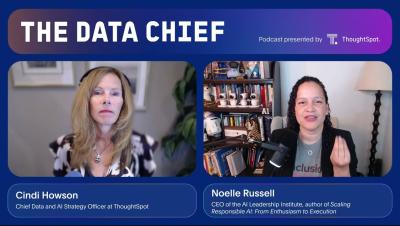
How have data lakes evolved over time, and what do open table formats and catalogs mean for the future of data lakes? In this roundtable discussion, George Fraser, CEO and co-founder of Fivetran, and Dan Lynn, VP of Product for Databases and Destinations, share their thoughts with host Niamh O’Brien about the future of data lakes and how Fivetran is preparing for it. Key highlights;

Chopped: AI Edition - Building a Meal Planner

As a dad of two toddlers with very particular tastes—one constantly wants treats for dinner and the other refuses anything that isn’t beige—I view dinnertime at my house as a nightly episode of “Chopped: Toddler Edition.” Add early bedtimes and the need to avoid meltdowns (theirs and mine), and the meal becomes less about gourmet aspirations and more about survival. The goal? Walk away with everyone fed, happy, and preferably not covered in food.

5 Reasons Why Data Analytics Users Should Care About Data Products

One of the fastest-growing trends in the datasphere today is the development and use of data products. As we move deeper into 2025 and beyond, data product usage is going to explode. In fact, according to the Gartner 2024 Hype Cycle for Data Management, Data Products are currently at the Peak of Inflated Expectations, signaling strong interest and rapid evolution in this space. You can download the entire report here. The advantages and impact of this new paradigm extend beyond data engineers.

Mastering Cost Predictability: Forecasting and Budgeting Strategies for Databricks

Are you struggling to predict and control Databricks costs? You're not alone—accurate forecasting of cloud costs remains a significant challenge for 80% of data management experts (Forrester). Join us for this session in our Weekly Walkthrough series, "Controlling Cloud Costs," where we'll explore how to remove the guesswork from forecasting costs in Databricks. You’ll gain invaluable insights into transforming your approach to cost management from reactive to proactive. With Unravel's Data Actionability Platform, you can forecast costs precisely and take immediate action to optimize spending.

#shorts - Think you're catching all the spikes in your #data? Think again.

With Qlik’s Anomaly (Spike) analysis type, you don’t just see the obvious — you uncover the hidden outliers buried deep in your data. Just pick your measure and time field... ...and boom — hashtag#Qlik surfaces the real anomalies in seconds. You also get narrative insights showing biggest spikes. smallest drops and total anomalies. No guesswork. Just instant, actionable insight. Let Qlik do the heavy lifting — so you can move faster, smarter.

Beyond the Hype: Putting Enterprise AI To Work

In this episode, Dana Gardner, Principal Analyst at Interarbor Solutions, is joined by Sridhar Ramaswamy, CEO of Snowflake. They discuss the impactful integration of AI with enterprise data, Snowflake's efforts to demystify AI for its customers, and future prospects for agentic AI and its potential to transform business processes.

The Fascinating History of Data Visualization: From Basic Maps to BI

Data visualization is an elementary component of human learning and understanding. It's also a significant capability of business intelligence (BI) and analytics solutions today. So, how did data visualization first come to be? The humble origins and gradual evolution of data visualization tools has led to an interesting timeline.

Top 40 Engineering KPIs and Metric Examples for 2025 Reporting

An engineering Key Performance Indicator (KPI) or metric is a clearly defined quantifiable measure that an engineering firm uses to gauge its success over time. With engineering being a very broad field, KPIs are employed in a variety of ways, ranging from company-wide analysis to project specific performance metrics. Company wide KPIs can be used to compare companies in the same industry, while project specific KPIs should be used internally to evaluate project performance.