Systems | Development | Analytics | API | Testing

Modern Software Development For Today's Systems & Applications


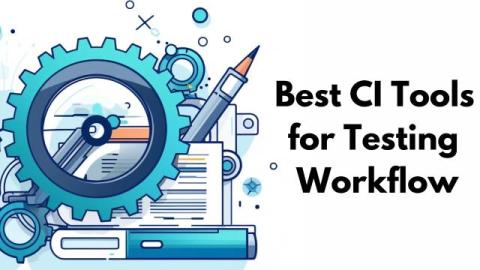
Best Ci Tools To Streamline Your Testing Workflow
Continuous Integration (CI) is the backbone of modern software development, enabling developers to detect and fix issues early by integrating code changes frequently. But what’s a superhero without their gadgets? That’s where CI testing tools swoop in! They ensure your builds are solid, your tests are green, and your sanity remains intact. In this blog, we’ll dive into the world of CI testing tools, unraveling their magic and exploring some of the most popular options available today.

Is It Time To Consider Moving Past AWS API Gateway?
AWS offers its own out-of-the-box API gateways. For many AWS teams, AWS API Gateways are a natural place to start when beginning their API management and API gateway journeys. However, as API practices and programs begin to scale, many organizations begin to look beyond AWS due to major limitations, feature gaps, performance issues, and cost-effectiveness challenges.
Using Python MockServer for API Testing
Using a mock server is a popular method of working around these limitations and realities, allowing you to test web server assets against specific requests, ensuring that your response data matches the expected outcome. Today, we’re going to look at a powerful solution for Python clients in the form of MockServer. We’ll walk through the tool’s basics and learn how to use it for your own testing.

Measure Your App's Speed & Success with New Performance Targets
Knowing how well your application is performing is just as important as ensuring it doesn’t crash. But what defines “good performance?” How do you know if your app is hitting the mark or falling behind? With SmartBear Insight Hub, you can now use performance targets to set and track specific benchmarks for your application’s performance metrics.
Unlocking efficiency: 5 key use cases for Tricentis API simulation
In today’s interconnected digital world, software development and testing often hinge on APIs and dependent systems. These systems are the backbone of modern applications, but they can also create bottlenecks when they’re unavailable, costly, or challenging to work with. Tricentis API Simulation eliminates these barriers, enabling teams to accelerate development, reduce costs, and deliver high-quality software with confidence.

The $500B AI Gamble: Will APIs Unlock America's Next Tech Revolution?
The United States is investing $500 billion into AI infrastructure, aiming to lead the global AI race. This initiative, backed by OpenAI, SoftBank, and Oracle, focuses on building data centers, chips, and scalable systems. But here's the catch: APIs are the key to making this investment work. APIs are the backbone of this effort, and their success will determine whether this $500 billion gamble pays off.
How API Product Managers Can Leverage AI to drive better decisions
The responsibilities of an API product manager varies depending on the organization and industry they work for, among various other factors. However, the common set of tasks they carry out include managing the diverse user needs, ensuring reliability, and aligning API strategies with organizational goals. Performing these duties requires a delicate balance. In addition, API product managers face increasing challenges as APIs evolve into strategic business drivers.

Services, Multizone & Load Balancing: Combining it all Together in Kong Mesh
Services are the core component of service meshes. But what does it mean to send traffic from a workload to a service? What is the identity of a service? How does configuration apply to services? How do services interact when your cluster is multi-zone? Kong Mesh recently accomplished a major overhaul of its service to make them more intuitive and easier to manage that we want to share.
Comparing AI API Gateways
AI Gateways are rapidly becoming essential tools for businesses leveraging artificial intelligence and large language models (LLMs). Traditional API Gateways have evolved to meet the demands of modern AI workloads, offering features that cater to the unique requirements of AI/ML applications. These include advanced routing for models, latency management, and comprehensive analytics to optimize performance.