Systems | Development | Analytics | API | Testing

Announcing Kong AI Gateway 2.0: Built for the Pace of Agentic AI

We have big news for platform and AI infra teams: *Kong AI Gateway 2.0 is available today in private beta*. It runs on its own dedicated runtime, ships on its own release cadence, and carries a completely reimagined user experience designed around the way teams actually build with AI: models, MCP servers, and agents as first-class citizens, not plugins bolted onto an API gateway.

Kong and ModelOp Partner to Deliver Zero-Trust Security for the Agentic Enterprise

We're thrilled to announce a strategic technology partnership between **Kong** and **ModelOp**. As enterprises rapidly transition into the agentic era, they face a critical challenge: how to deploy AI fast enough to stay competitive without taking on unacceptable regulatory or security risks. Together, **ModelOp** and **Kong** are solving the "last mile" problem of enterprise AI delivery.

2 Million Runtime Downloads: Thank You for Trusting N|Solid

Reaching a milestone is always exciting. Some milestones carry a deeper meaning. Today, we're proud to share that the N|Solid Runtime has surpassed 2 million downloads. The milestone reflects growing momentum, with downloads accelerating and putting us on track to nearly double last year's total. To us, this isn't simply a download count.

Why Top Brokerages Are Investing in Data Platforms, Not Just CRM Systems

Open a brokerage’s CRM instance a few years in, and it rarely looks like a sales tool anymore. Somewhere along the way, it picked up MLS feeds, transaction history, integration logic, reporting dashboards, and lately, the raw data behind a first AI pilot. None of that was the plan. Each piece got bolted on because the CRM was the system already sitting there. A CRM was built for a narrower job than that: logging a call, tracking a pipeline, managing the relationship an agent owns.

Popular PHP Frameworks Compared: Pros, Cons, and Tradeoffs

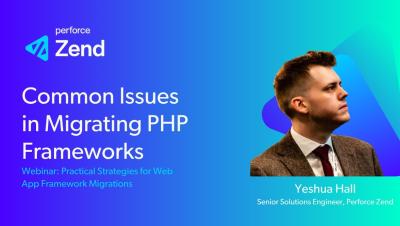
Choosing the right PHP framework means balancing developer experience, performance, stability, and long-term maintenance. In this clip from a recent webinar, “From Legacy to Long-Term Stability: Practical Strategies for Web App Framework Migrations,” Zend Senior Solutions Engineer Yeshua Hall breaks down the strengths and trade-offs of today's most popular backend frameworks, including Laravel, Symfony, Laminas, and Mezzio.

How to Upgrade or Retrofit Web Applications with a Data-First Migration

In this clip from a recent webinar, “From Legacy to Long-Term Stability: Practical Strategies for Web App Framework Migrations,” Zend Senior Solutions Engineer Yeshua Hall discusses a data-first approach to the strangler fig pattern, where business logic and database interactions are extracted before rebuilding the user experience. This strategy simplifies data migration, accelerates modernization efforts, and provides a flexible foundation for future development.

What Is the Strangler Fig Pattern?

In this clip from a recent webinar, “From Legacy to Long-Term Stability: Practical Strategies for Web App Framework Migrations,” Zend Senior Solutions Engineer Yeshua Hall explores the strangler fig pattern, one of the most widely recommended strategies for web application and PHP framework migrations. This clip covers how the strangler fig pattern works, why it reduces migration risk, and how you can test, deploy, and validate changes throughout your migration.

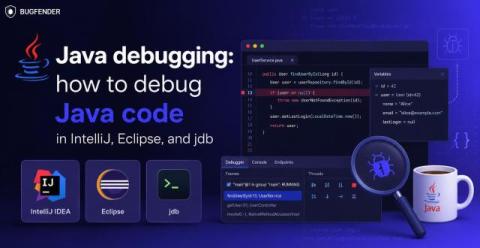
Java debugging: how to debug Java code in IntelliJ, Eclipse, and jdb

An effective Java debugging strategy lets us pause execution, inspect data, and observe real execution rather than relying on vague assumptions. The complexity of the Java Virtual Machine creates unique challenges, but a focused approach will turn this complexity to our advantage. This guide will equip you with the tools to do this, looking at: By the end, you’ll have a practical workflow to debug Java reliably across local and remote environments.