Systems | Development | Analytics | API | Testing

Real Estate Product Roadmaps: How to Go From MVP to DataDriven Platform

Shipping an MVP often is the easy part. What comes after — turning it into a scalable, data-driven platform — is where real estate and PropTech products most often stall. The gap is rarely a feature problem; it is a roadmap problem. Teams accumulate a backlog and start building without a clear picture of what stages come next, what signals indicate readiness to move between them, or how decisions made today in data, architecture, and team structure will play out eighteen months from now.

Next.js vs React: What's the difference and which should you use?

The Next.js vs React question is not really a comparison between two competing tools — Next.js is built on top of React. React itself is a UI rendering JavaScript library used for building user interfaces across platforms, including web applications and mobile apps with React Native, while Next.js is a framework that wraps React and makes concrete decisions about routing, data fetching, and server-side concerns.

Perforce P4 vs Git for AI Coding Agents: Why Parallel Development Hits a Merge Wall

A few months ago, a CTO I respect posted on LinkedIn that he was thinking about going back to Perforce P4 or SVN. He runs a modern engineering org and uses Git. The trigger was that his AI coding agents were stomping on each other’s changes faster than his developers could reconcile them. That post isn’t an outlier. It’s an emerging pain point in AI-driven workflows.

API Gateway vs AI Gateway - What Actually Changed?

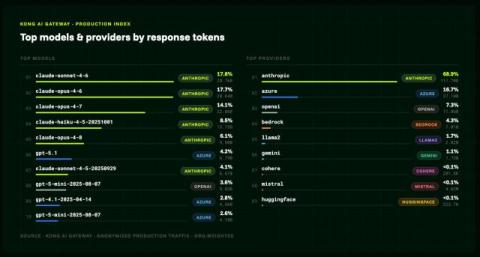
Kong's AI Gateway applies the same architectural pattern as the API Gateway — now governing LLM, MCP, and agent traffic at the infrastructure layer. Just as API gateways abstracted rate limiting, auth, and caching across microservices, AI gateways do the same for large language models and agents — with token budgets, semantic caching, and semantic routing replacing their REST equivalents. Kong breaks this into three layers: LLM Gateway, MCP Gateway for tool calls, and Agents Gateway for agent-to-agent traffic.#Shorts.

Address the Long Tail of Legacy Applications with AI Modernization

The pressure to scale AI is on, forcing most organizations to take a serious look at their legacy technology stacks and reinstate failed or postponed modernization projects. AI both requires and enables a modern enterprise. Traditional barriers to modernization—such as time, cost, and business disruption—are now significantly reduced with the introduction of AI modernization tools.

AI for DevOps: Fueling Innovation at Scale | Full DBTA Webinar

AI innovation moves fast, but without compliant data access, even the best ML, AI, and analytics initiatives can stall. In this webinar roundtable, experts from Perforce Delphix, 3T Software Labs, and Redgate explore how organizations can accelerate AI delivery without compromising data privacy, security, or compliance. You’ll hear practical insights and real-world examples on how to remove one of the biggest bottlenecks in modern software and data workflows: access to safe, usable, production-like data.

Tokens Per Watt Is the Real Limit on AI Revenue

Most AI revenue will flow through tokens — and the two bottlenecks are tokens per watt (energy cost) and tokens per second (throughput). Tokens per watt determines how much output you can generate from a fixed energy supply — already constrained and getting tighter. Tokens per second sets the ceiling on how fast that revenue can flow. Kong's AI Gateway optimizes both at the connectivity layer: semantic caching and semantic routing increase token output without adding watts or latency.#Shorts.

Is WebSockets enough for AI chat?

WebSockets are the right protocol for production AI chat. But that fact doesn’t prevent the failure most teams hit first. An enterprise load balancer closes the idle connection at 60 seconds during a tool execution wait. Your reconnect logic fires in under a second, the agent keeps running server-side, and the client receives nothing from the gap. No tokens, no tool call results, no context. The reconnected socket has no view of what happened while it was down.

The new era of Healthcare Modernization in 2026 & beyond

Is your legacy healthcare system holding you back? Would you still wear a suit that no longer fits, just because it once looked great? Probably not. The same logic applies to your IT infrastructure. Healthcare organizations often grow comfortable with legacy systems simply because they’ve always worked. But what once worked well may now be putting your operations, patients, and reputation at serious risk.

Are Microservices Dying?

LLMs are absorbing the business logic of microservices for agentic use cases — but both patterns will coexist in enterprise infrastructure for a long time. Cloud-native infrastructure (microservices + APIs) keeps powering web and mobile experiences. The agentic layer — LLMs, MCP tool calls, and context traffic — runs in parallel, activating the same APIs and CRUD operations underneath. Kong manages both swim lanes: the API traffic between clients and microservices, and the context traffic flowing between agents and LLMs.#Shorts.